Vinny takes his leave

The albatross chicks have been exiting Princeville with increasing regularity.  As of this writing, 13 have left and 9 remain.  Some of them have just disappeared, most likely flying off the ocean bluff in the early morning hours or late dusk.  I do not know of any who have fledged in the evening, but I rarely spend the night camped out near an albatross chick, and I have learned to avoid using words like “never” and “always” when discussing albatross behavior.

My neighbor, Bob Waid, called me one morning to say that one of our neighborhood chicks had left his comfort zone, the area that included the location of his nest and extended a couple of houses away. This is a typically a sign that a bird has heard the call to fledge and has started to move towards an ocean bluff.  By the time the chick got there, four of his human admirers had joined him. Bob thought this albatross had an attitude so he started calling him Vinny, after the character John Travolta played on the old TV show, “Welcome Back, Kotter.”

Bob took some beautiful photos of Vinny’s Big Day Out and has allowed me to share them.  His blog is http://www.albatrosskauai.com.

We watched Vinny check out a bluff that does not get much of an ocean breeze and that has tall trees that a first-time flyer might have difficulty propelling himself over.  Then he walked over to some thick vegetation that led down into a green belt, which then climbed uphill to some local condos.  Five years ago one of our local birds, Niko, plowed through that jumble and took two days to climb up to the condos.  There is always the possibility of damage to a wing during the course of a hike like this, so we humans were happy to see Vinny climb back up on the grass.

Vinny1

He kept walking and decided to try another direction.

Vinny changes direction

Vinny changes direction

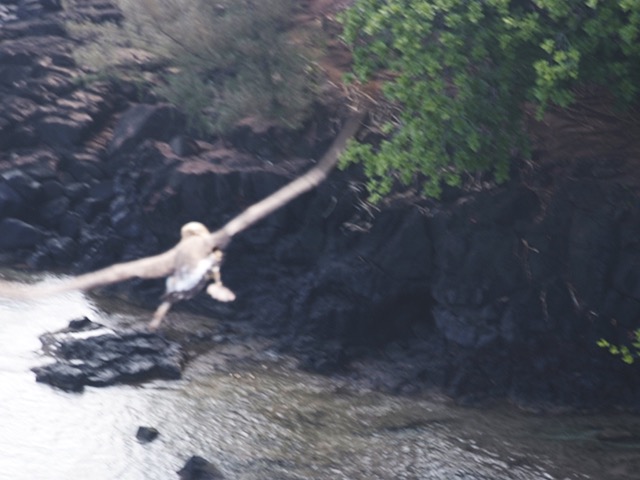
Fortunately, this house belongs to neighbors who love the albatrosses, and they left an albatross take off spot at the side of their home.  Vinny was happy to be the first chick to try it out.

Vine follows the ocean breeze

Vine follows the ocean breeze

He found just the right spot….
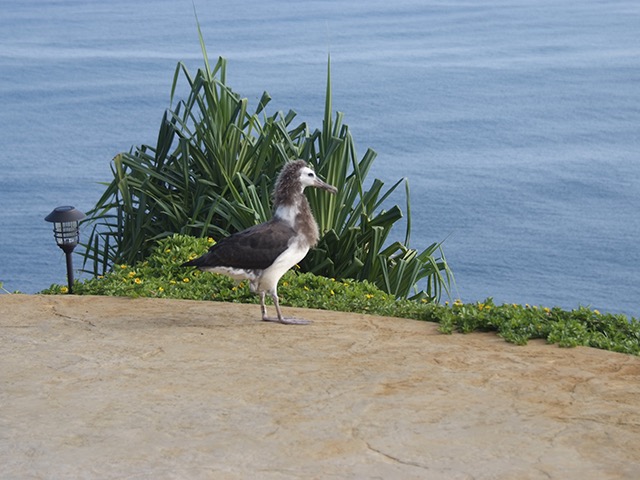
Vinny4

He practiced a little….

Practice makes perfect!

Practice makes perfect!

Bidding us farewell?

Bidding us farewell?

And the rest is history.
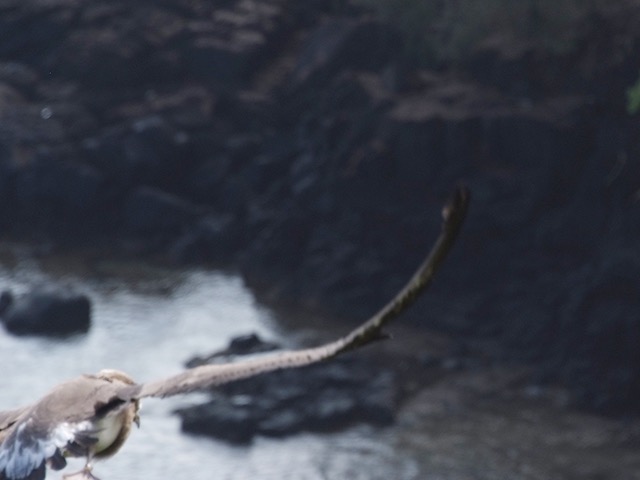
Vine takes off

Vinny takes off

Vinny8

Vinny10

A hui hou, Vinny! Until we meet again!

A hui hou, Vinny!  Until we meet again!

A hui hou, Vinny! Until we meet again!

We will not see Vinny back in Princeville for at least 3 years, probably more.

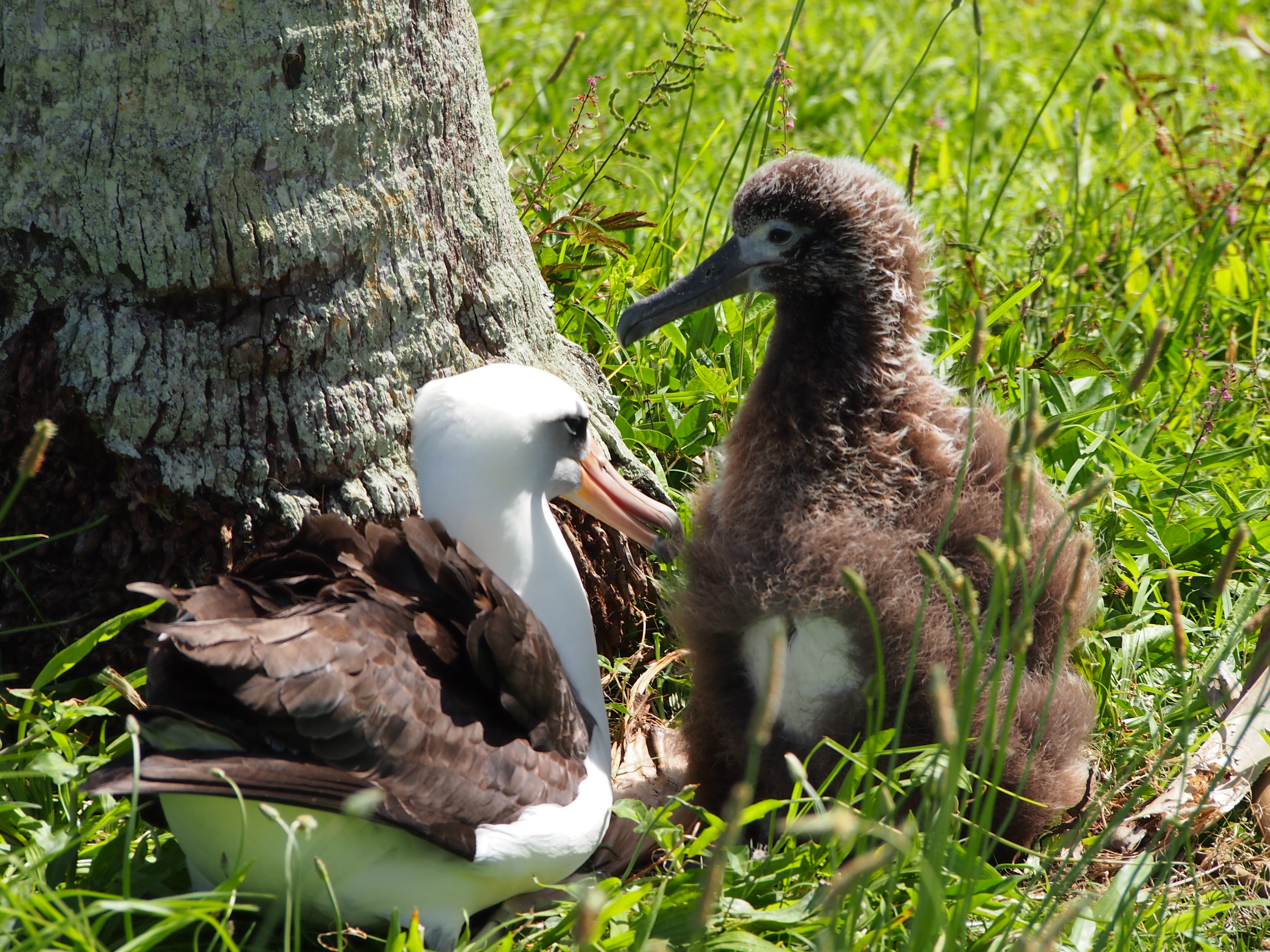
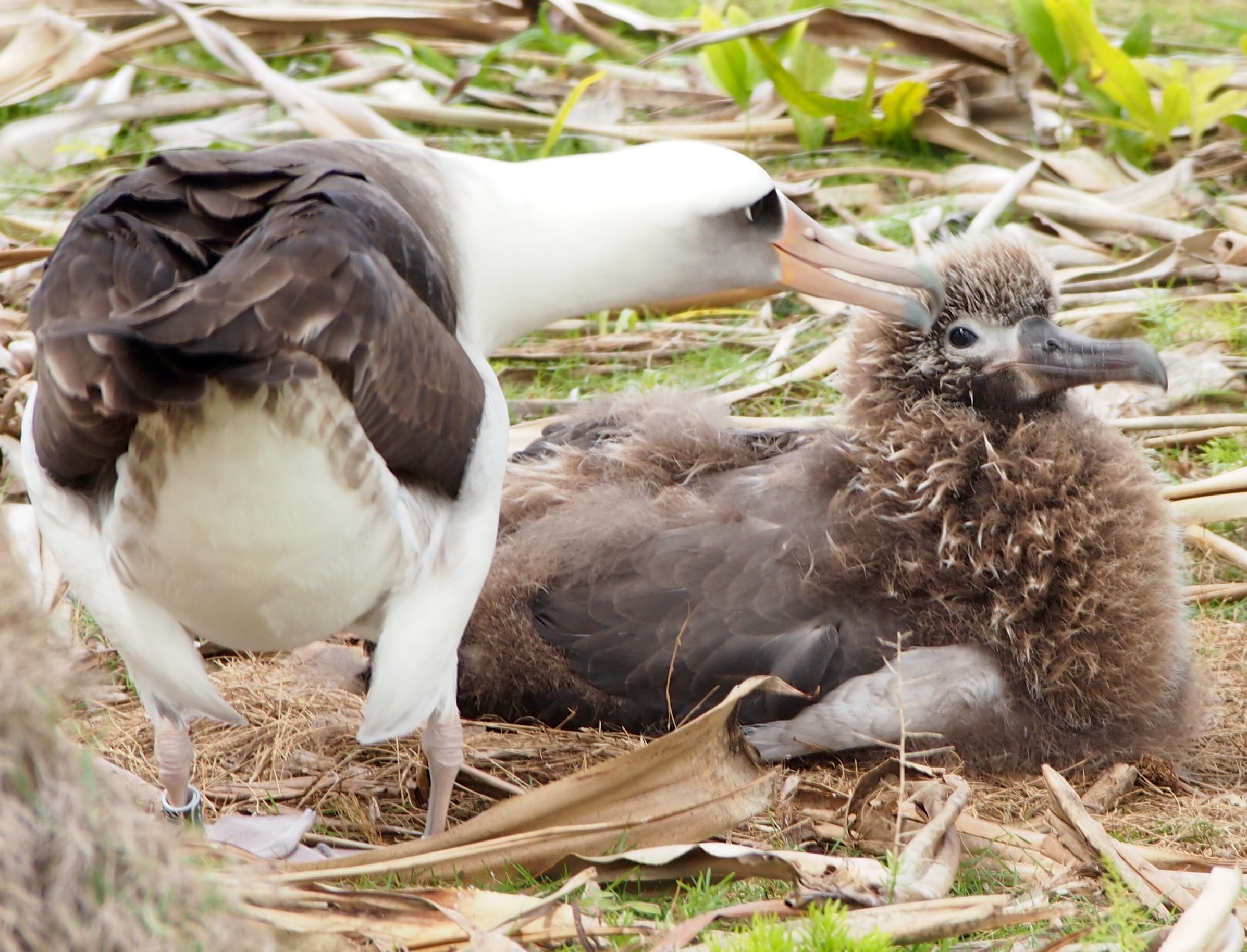
People may tell you that an albatross fledges when the parents stop feeding him.  Tell that to Vinny’s father, KP460, who flew into the nest area about 2 hours after Vinny had left.  He spent about ten minutes walking around the area, clacking his bill and vocalizing, looking for his chick.  Then he gave up the search and sat down to rest.

Where are you, kid?

Where are you, kid?

At this time of year, the parents look like their feathers are rumpled, they all seem to be molting on their heads.
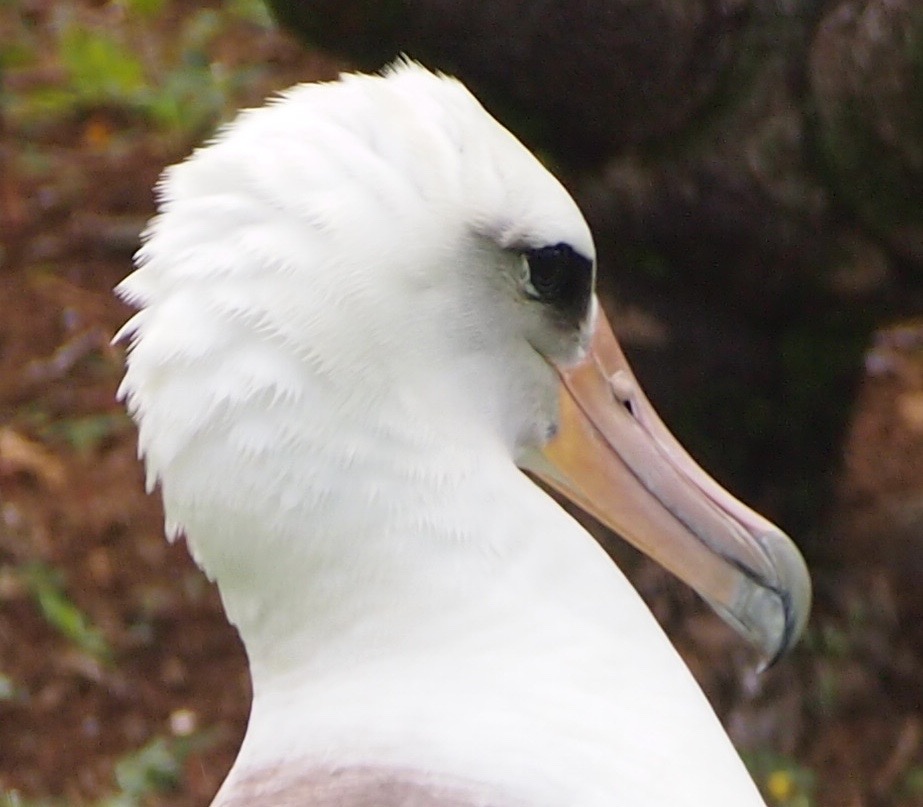
How to spot a parent

How to spot a parent

Vinny’s dad stayed overnight, then left late the next day.  He knows that he will not have to return this season, now that his chick has begun his life as an adult albatross.  KP460 will return in November to meet up with his mate.  They have raised a remarkable number of chicks, eight, in the last ten years.  No other couple in Princeville have achieved this level of nesting success.

Vinny is somewhere out over the Pacific, learning how to find food by himself, flying with increasing confidence through powerful, pounding storms and benign sunny days.  Those of us who watched him fledge will be looking for him, and the odds are good that we will celebrate his return a few years from now.  Many of the chicks who have fledged from Princeville in the last 14 years have come back here.

Wherever these former residents are, they carry with them the love and respect of those of us who feel privileged to catch glimpses of these lives lived parallel to ours, as they ignore our human world and follow ancient instincts that each one embellishes with a unique personality that we humans find so endearing.  They are at once so complicated and enigmatic, and at the same time so simple and familiar.
Posted in Uncategorized | 1 Comment

A402 explores his new/old world

My last post was about a 3-year old, A402, who had just returned to the area of his chickhood for the first time since fledging. He came back again. He engaged very briefly with an older albatross, a 7-year old named Niko who spends most of his time in my neighborhood. Then Niko left. I watched A402 walk around and talk to himself. Mostly his vocalization is a variation of what I hear a parent say to call a chick, a descending sort of “Eh, eh, eh,” sound. That is interspersed with some whistling, which an albatross uses in a variety of circumstances.

In the second half of the film a couple about 20 feet away appear to be mimicking his vocalizations, which seems to surprise him.

He notices the swarms of millions of gnats that took over the golf course that afternoon, then continues vocalizing.

A day after I recorded the films above, I found A402 sitting on his sibling. Makai did not seem to mind being squashed at all. I have never seen this before, even with parents. The chick did not make any protests, even when A402 groomed him around the eye.

A402 has not returned recently, he probably will stay out at sea until next year. He will pass the time flying in search of food sources, sitting on the surface of the ocean from time to time to rest and to grab squid, fish, flying fish eggs and small crustaceans. He will not come back to land until he returns to Kauai. An albatross returning for the second year back to his old home generally will not come back until January or February of the following year.

Next year he will begin the long process of finding a mate. It will probably take two or more years of hard work. For birds that spend so much time at sea, they have developed some fairly complex patterns of behaviors. They pack an extraordinary variety of movements and vocalizations into their social interactions.

Some of the birds that I have been observing for ten years have never found a mate. Some birds have moved to other areas to look for one. Georgia Gooney, a 5-year old who fledged from Princeville, appeared regularly on the Cornell Webcam this season. One of the Princeville chicks showed up at Midway, tapping on the ranger’s door. Wherever they end up, it will take a combination of ancient instinct, the ability to adapt to whatever environment they may end up in, and the intelligence unique to each one to survive and to find an appropriate nesting partner. But looming over all of these is the one thing that will ultimately decide their fate.

Will the human beings they share their world with care enough about them to help and not to hinder their chance of survival as a species?

Posted in Uncategorized | 5 Comments

Another grown up chick returns to Princeville

I happened to be checking out nests on the golf course when I recognized the wobbly stance of an albatross who had just returned to land for the first time since fledging. It was A402, a 3-year old walking not too far from the area where he had spent his months as a chick. Unfortunately, a dark cloud had moved over us and the rain meant the camcorder would have to remain in its camera bag. People who live in Kauai are accustomed to sudden downpours pounding out of a sky that seemed to be clear about ten minutes previously. They may last just a few minutes, but they are intense.

When the rain stopped I started to film, staying out of his line of sight. The worst thing an observer can do is to change the behavior of the animal being observed.  When a photo of an albatross shows a bird staring straight into the camera, the photographer has changed from an observer to an intruder.

There were several adult albatrosses hanging out in the area where A402’s sibling was sitting in his nest. My back was to them, but I could hear the bill clacks, the occasional attempt at interesting someone in a display, the sounds of socializing. The adults are drawn to the chicks, their nests are gathering places for the birds who have been here before, along with some that were banded in other areas. The birds that return for their first time back to Princeville usually land first on the golf course, wherever their nests were located. It must seem a lot less intimidating to them to come down on a large, empty patch of grass; one does not need fancy navigating skills to land on a gigantic lawn.

A402 stayed a very short time. He did not seem to notice the gathering of the other adults.

Very often I see a bird just one or two times when he first comes back to Princeville. Even checking every day I miss seeing most of them on their first day back. Are they just checking to see that they know where to go and can handle walking on land? Sometimes when a bird like A402 returns for the second year since fledging, he comes back to the place where he landed the first year, not to his original home. This year, of the 45 nests that we started out with, there were 22 birds that had fledged from Princeville. Twelve of those nested in the area where they lived as chicks. Of the other ten, nine who were chicks in residential areas nested next to the golf course. As more and more albatrosses who fledged from here come back, find a mate and nest in Princeville, we’ll be able to see what percentage nest where they were chicks and what percentage relocate to another part of Princeville.

A402 came back a couple of weeks later and walked right up to his sibling, pausing to reach out to tap him with his bill. The part of this human being that loves simple, happy endings wished that the chick would have let the other bird get close, showing that he was relaxed in his presence and perhaps recognized him as a sibling. Instead, he clacked at A402 just as he had let a group of birds before him know that he was displeased by the attention.

A402 approaches sibling

A402 approaches sibling

We will never know everything about these birds.  The fabric of their lives is patterned by instinct, but it is richly embroidered with the behavioral differences that make each albatross unique.  Where does the fabric end and the embroidery begin?  We may never know.

Posted in Uncategorized | 2 Comments

Angry birds

Sometimes it’s tough to be a chick, waiting patiently for Mom or Dad to fly home with a tasty meal, and having to put up with the unsolicited attention of those shiftless adult albatrosses pestering a poor little bird who just wants to nap, or work on his own little nest, or just contemplate.

Often the adults will pair up to bother a chick. It may be part of a courtship display, a way of showing the other bird that you know your way around a chick. Tell that to the beleaguered little guy in this film:

This next chick became increasingly irate as one adult resorted to redecorating the nest, throwing bits of debris on the unhappy inhabitant. I think I hear the chick saying, “I’ll poke your eye out!” to one of the intruders.

In both films, and in all of the interactions I have observed, the adult non-nesters rarely get very annoyed by the chick’s anger. Even when the second chick was going for an eye, the adult just moved out of the way. Perhaps they get wound up in the process of finding a mate, or maybe they just like those little ones too much to ever raise a beak to them.

Sometimes a single adult sits near a chick and does not appear to cause any discomfort.

The adult in this photo is the 5-year old brother of the chick. I have found Hilly sitting with his younger sibling on the golf course more than once, and the little one does not seem to mind.

Chick at nest 6 and big brother

Chick at nest 6 and big brother

These are also two siblings. The chick is Enzo, the 5-year old is Niko. I wrote about Niko’s remarkable journey to fledging in my April 16, 2014 post.

Enzo and Niko

Enzo and Niko

I have seen that this literal closeness of a couple’s chicks from different seasons does not always happen. For instance, Hilly’s 4-year old sibling Gaga has also returned to the golf course and sits a distance away from the other two. This brings up another interesting question. Can siblings recognize each other so that as adults they can avoid ending up with a close relative as a mate? What about the albatrosses that are not biological siblings, the descendants of PMRF birds that were raised by Princeville parents back when the egg swap was still taking place here? (See my December 18, 2011 post for information about the egg swap.)

Unlike most birds, Albatrosses have a very good sense of smell. Perhaps this helps them to identify biological siblings. This is another reason for taking good data, to keep track of whether relatives are nesting with each other. So far they have not, at least not the ones whose relationships I have recorded.

Once again my mantra resurfaces: the more I learn about these birds, the less I seem to know about them. Would siblings who share one parent mate with each other? I have not seen that so far. Do they have a scent that a half-sibling could recognize? We may not know if they can actually recognize close relatives and instinctively avoid mating with them, but as years go by we should find answers to some of these questions about mate selection scattered in the trail of data left by the Princeville albatrosses. It is a long, meandering path, with many enticing sidetracks along the way, but it rewards us with an occasional glimpse into the rich details of lives that make an ancient order of birds seem at once so foreign to us, and yet so familiar.

Posted in Uncategorized | 3 Comments

KP944 meets his chick

It was February 2nd. I had just checked on a nest where KP943, the mother bird, was sitting on her newly hatched chick. The father of this chick is KP944. The parents’ band numbers are just one digit apart because they were banded as chicks on the same day in 2005, in nests that were in neighboring yards.

943 and 944 had their first chick 2 years ago. They were both naturals at parenthood. In my post on May 26, 2013, I wrote about how one of them was able to get their chick, temporarily blinded by avian pox, to find his parent’s bill and thus get some nourishment.

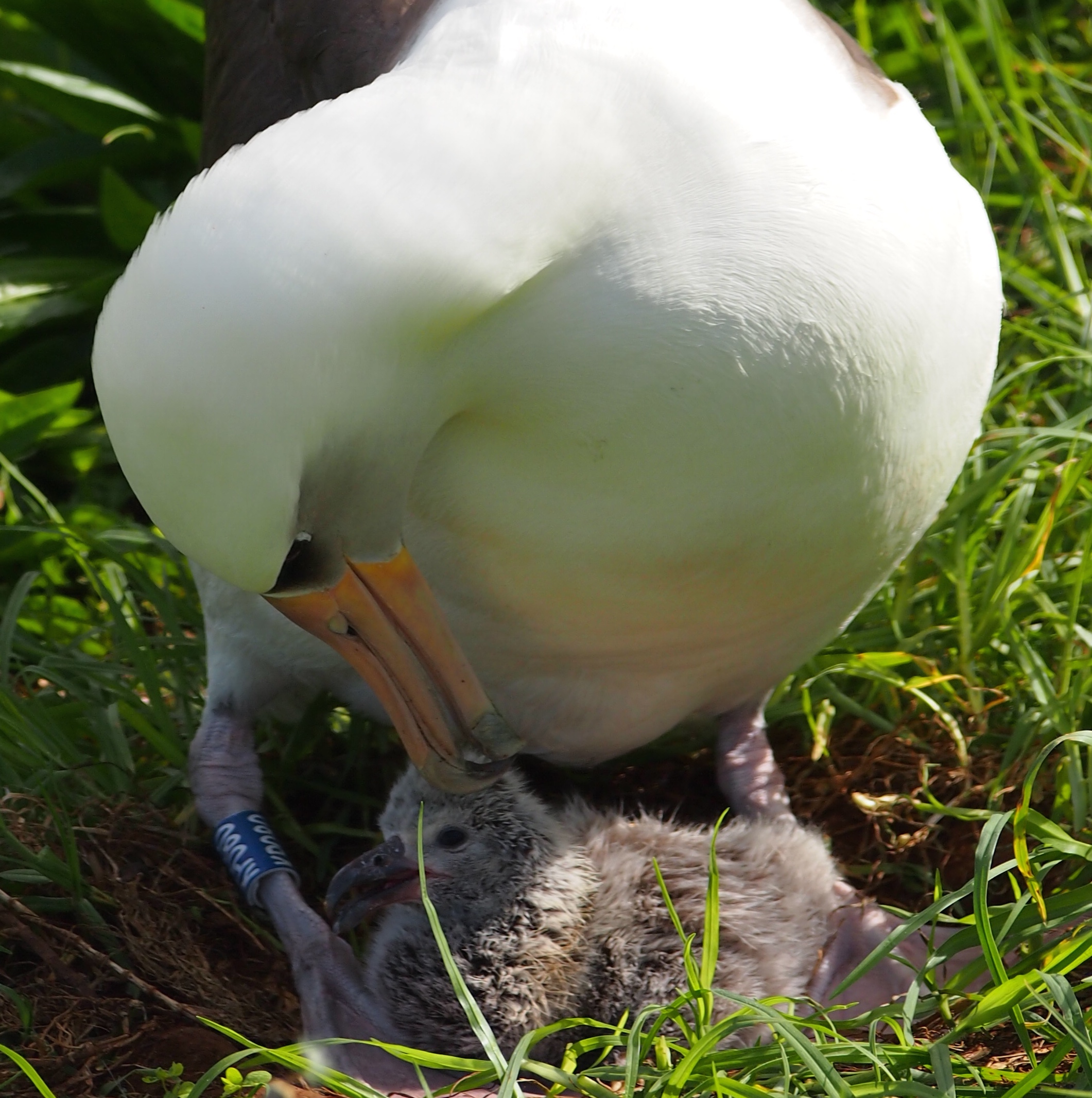
As I walked down the street, an albatross landed near me. It was KP944, returning to see his chick for the first time. I ran to the nest and waited for him to make his way there. In this clip he is being greeted by his mate, but she is not immediately standing up so he can see the chick. When the chicks are newly hatched, the parents seem to be very reluctant to leave them. The return of her mate meant that it was her turn to fly out to sea to hunt for more food.

943 finally stands to let her mate see the tiny chick.

Mom does not want to leave! She gently guides Dad’s bill away from the chick, as though that might prevent him from making her move off of the nest. At the end of the clip, both parents are touching the little one, who is reeling a bit from all of the attention.

Dad nibbles the chick affectionately, then tries non-stop to sit on his chick, striving to position himself so the chick will be sitting under his brood patch, a warm area of skin on his lower abdomen. Mom is sitting so close to the chick that Dad cannot place himself in just the right spot.

Dad finally figures out how to claim his spot on the chick. Mom reluctantly walks away from the nest, after pausing to exercise her wings. She returns to the chick for one last look before heading out to sea to find food for him.

This unwillingness of the parents to leave their newly hatched chicks does not appear to make sense in terms of the survival of the species. The chick needs nourishment, and it is the parent’s job to leave the nest as soon as the mate has returned and to fly out to the ocean to look for food. Possibly this reluctance to go helps to solidify a bond that will inspire parental care in the future. As the chick’s appetite increases, parents will spend less time at the nest and more hours acquiring food. The ratio of hard work to relaxation at the nest expands exponentially. Even an observer who frequently checks the nests feels very fortunate to spot a parent. If humans are excited to see a parent return, imagine how the chick must feel. Perhaps all of the hours parents spent with that little chick at the beginning of the feeding cycle reinforce the instinct that pulls parents out to sea for days at a time, then drives them home to the nest. All for a goofy little fuzz ball oblivious to danger, sitting out in the scary world for all to see, depending without knowing it on the kindness of strangers.

Thanks go to all the strangers who watch out for these little ones, who ask people to move back and give a chick some space, who remind dog-owners that there is a leash law on this island, who escort fearless seabirds as they walk across a busy street, who generally take on the responsibility of helping to ensure the continuation of an ancient cycle that we all hope will outlive us.

The albatrosses may not appreciate you, but you are all heroes in this story.

———————————-

For those of you who can’t get enough of all things albatross, the full 14 minute film is at https://www.youtube.com/watch?v=OrxKzDn95is .

Posted in Uncategorized | 3 Comments

Waiting

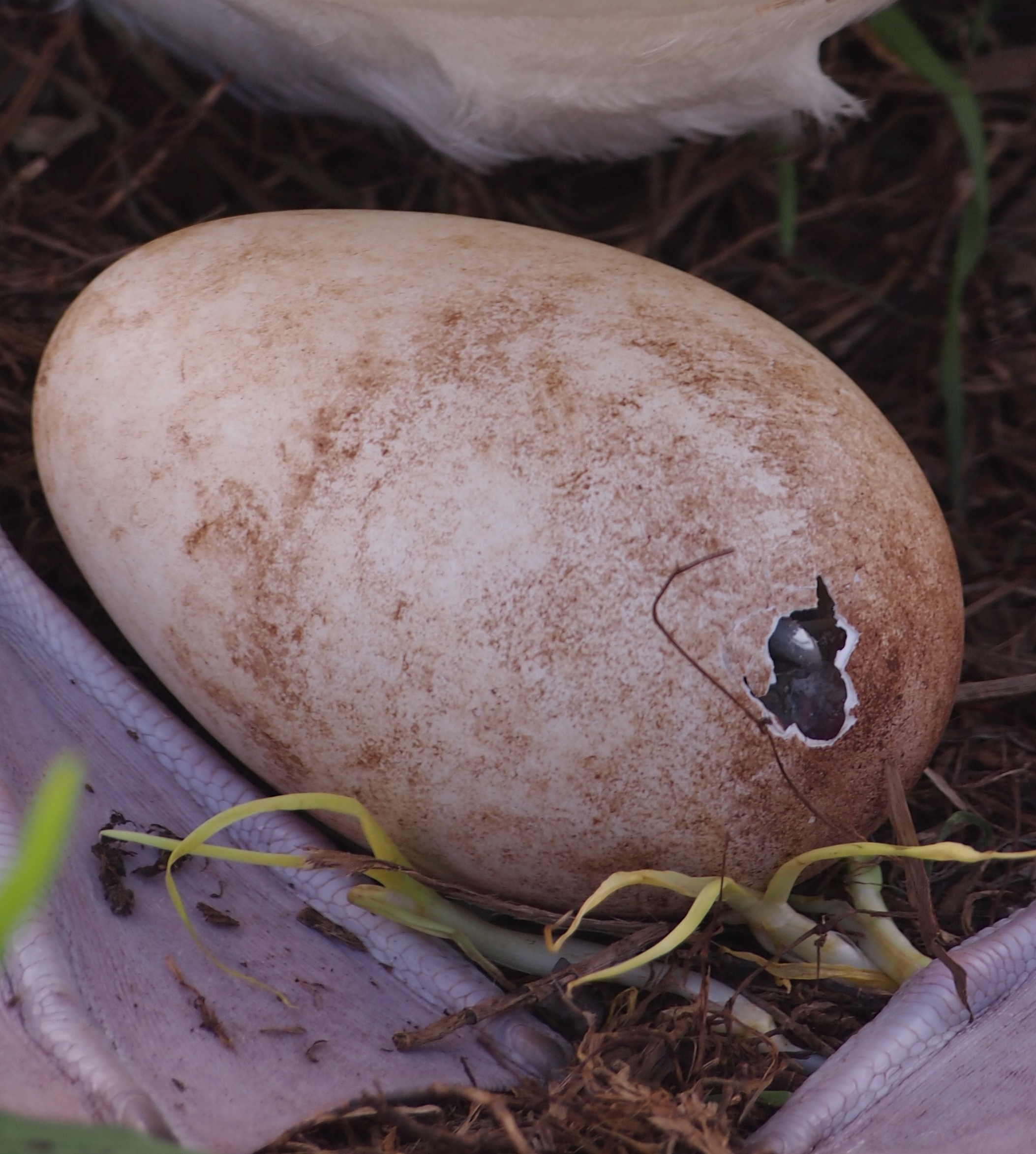
One week ago I found a broken egg at the nest across the street from my house.

the broken egg

the broken egg

There was no chick in the egg, it was infertile. KP404 and KP756 are the two females who had built this nest of dirt and leaves in my neighbors’ garden, and it would have been a lovely, cool spot for an albatross chick. Last year, they incubated an egg that was fertile, thanks to a male albatross across the street from them. They spent that season raising a healthy chick. This is more likely to happen in an area like Midway, where all of the nests are close together and the females cannot avoid the males as easily as they can in Princeville. We have plenty of space for the nesting birds to spread out in; a male does not have such easy access to females.

Later that day I saw KP404 sitting on the lawn below the nest site.

404 sitting near nest

404 sitting near nest

She spent the night there, then left the next morning. She returned later and again spent the night, with an albatross who has lost her mate keeping her company. She was waiting for KP756; I saw her every day since the egg broke. Albatrosses who have lost an egg or a chick often do this. They need to meet up with the individual that they spend most of their time on land with, the one they have shared nesting duties with for so many weeks. They will probably come back to see each other here more than once. Both birds need to know that they can depend on the other one to put maximum effort into nesting duties. They will reinforce their bond by sitting close together and gently grooming each other. Usually they will meet up with each other at one particular spot, and will probably find each other there the following season. One couple in this neighborhood sat together together on one lawn on most of the days since their egg broke at the end of January. They may not nest there next year, but they will know where to find each other.

Yesterday KP756 returned. She and KP404 were sitting close together around the corner from their nest, not too far from a chick who was being visited by his mother. When two albatrosses groom each other around the head, it seems to indicate a number of things, depending on the couple:

I’d like to nest with you next year;

I’m glad to see you made it back here safely;

and of course,

It’s O.K., we’ll try again next season.

Posted in Uncategorized | 1 Comment

23 chicks now reside in Princeville

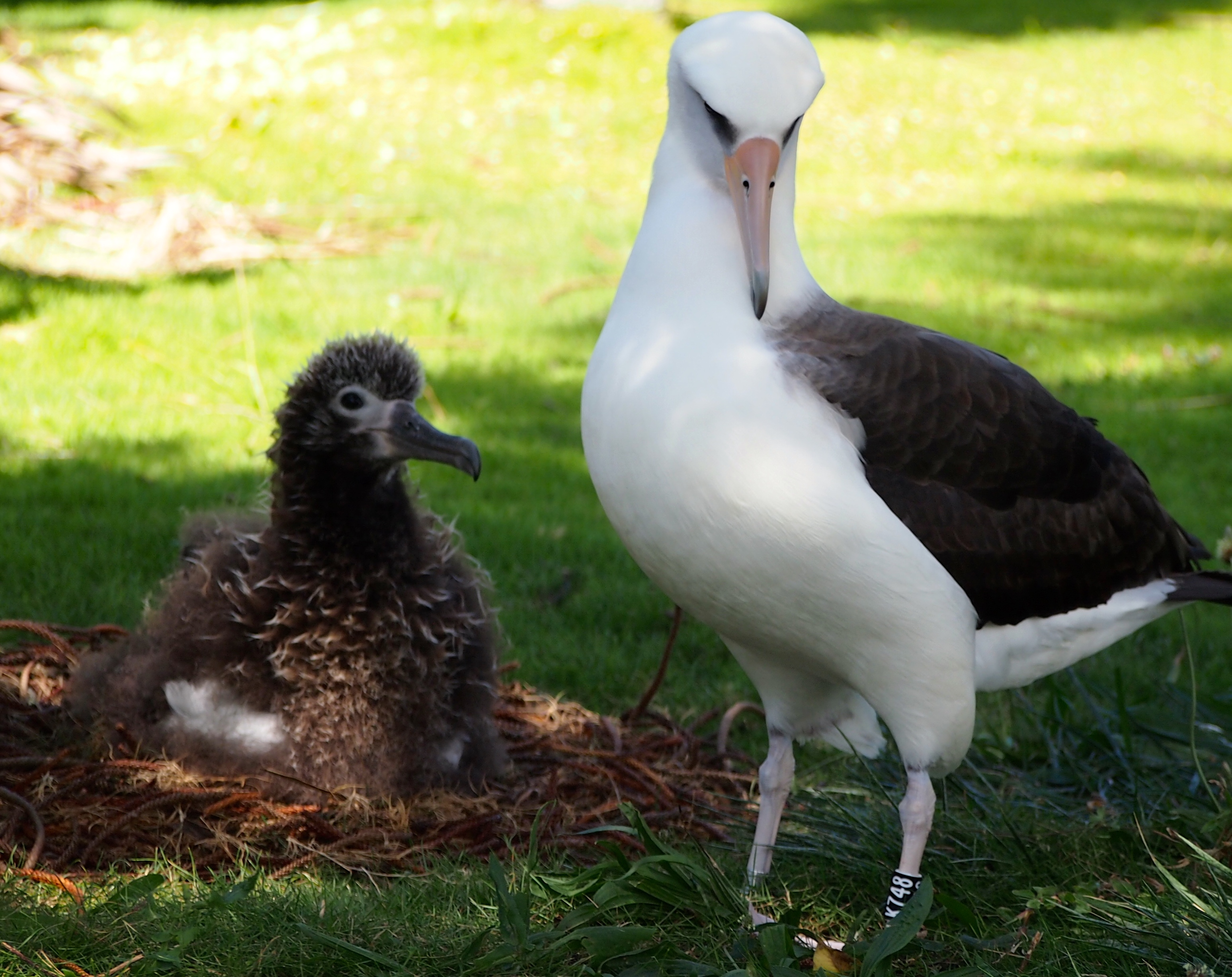
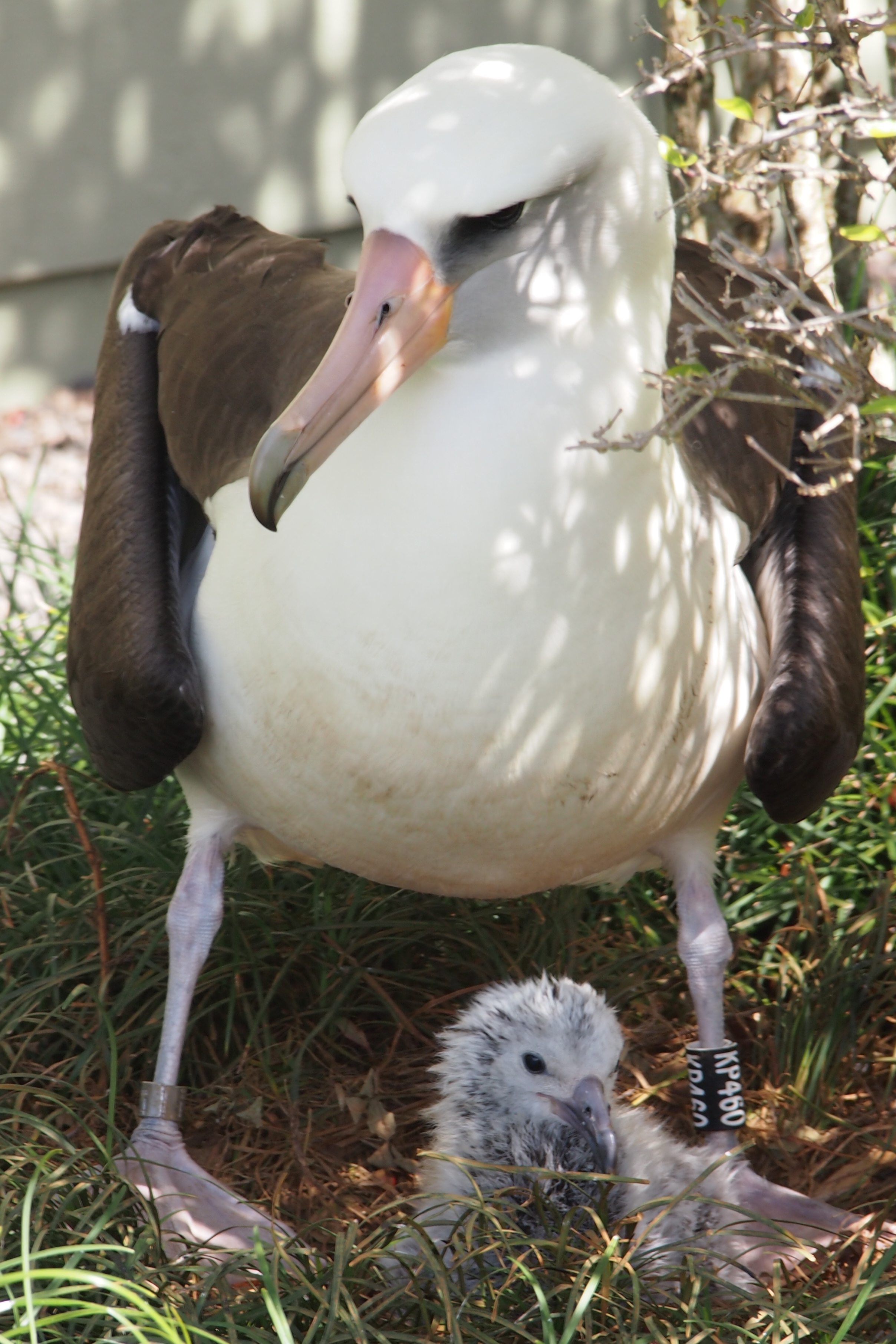
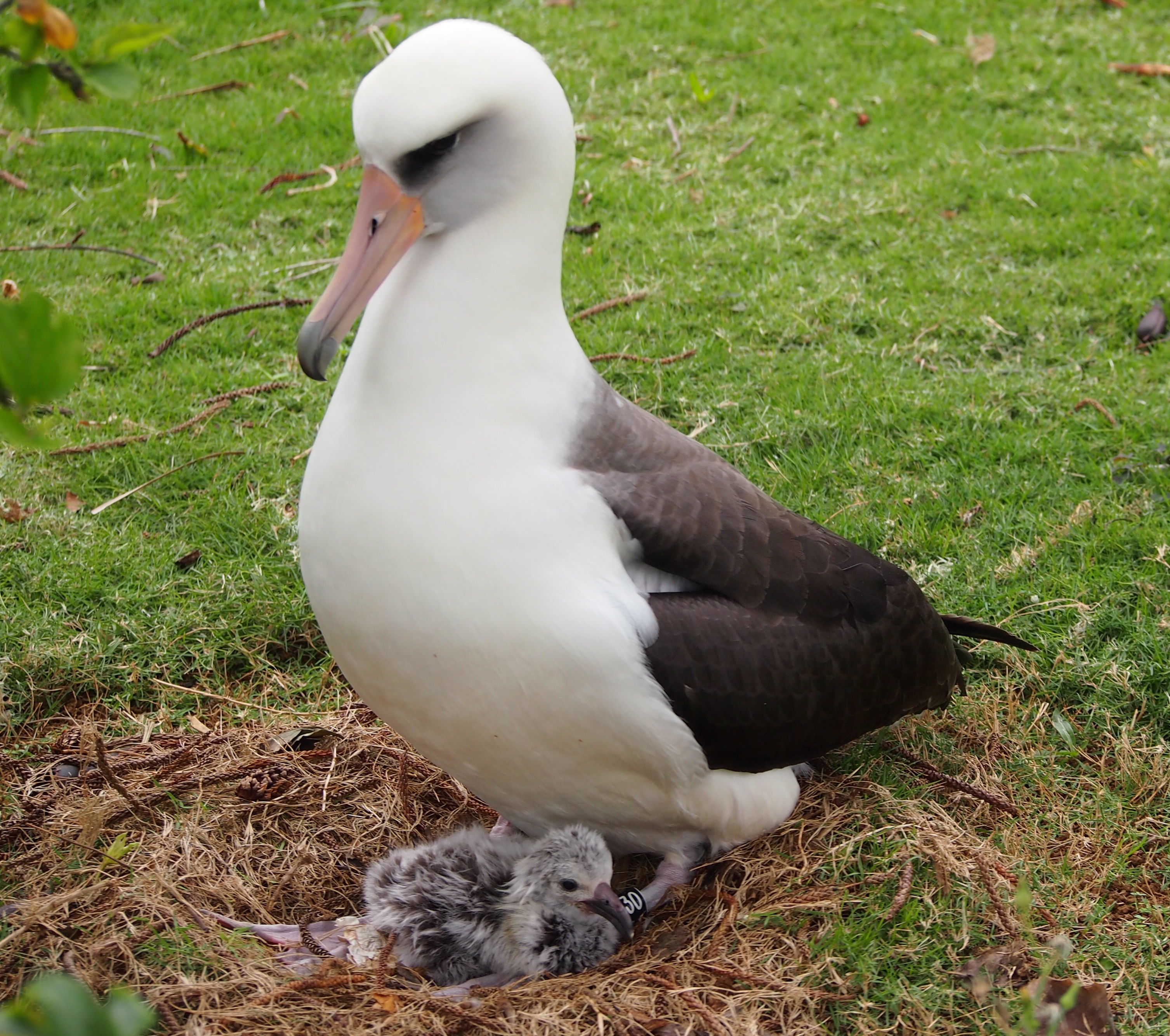
What better way to begin than with a photo of Dad with his chick. This male is half of the couple local people know as the “Dragon House Birds.” For years they nested in one specific yard, then last season the female started sitting next door. The male tried to insist that the nest be where it always was, but she who lays the egg gets to choose the nesting spot.

Dad (KP460) with chick

Dad (KP460) with chick

This may not be the total number of chicks, ultimately. There is one more egg that was laid a bit later than usual and may hatch in the next week.

Here is a list of all of the years for which I have records of the number of albatross chicks that fledged successfully.

2000-2001 6
2001-2002 9
2002-2003 12
2003-2004 9
2004-2005 12
2005-2006 13
2006-2007 20
2008-2009 12
2009-2010 18
2010-2011 10
2011-2012 21
2012-2013 19
2013-2014 10
2014-2015 23 or 24?

Posted in Uncategorized | 1 Comment

Princeville is having a baby boom

Our new total, as of yesterday:

15 chicks
2 pipping
6 have not started pipping, but the parents have had chicks before
2 nests have new parents, it is unknown if they will be successful but they definitely are male/female couples

Other couples are female/female pairs, which usually do not produce fertile eggs, and some nests have had bad eggs or were abandoned for other unknown reasons.

Last year we had 10 chicks. Without question this is a very fruitful year for Princeville.

KP943 and her new chick

KP943 and her new chick

WhA172 and her chick

WhA172 and her chick

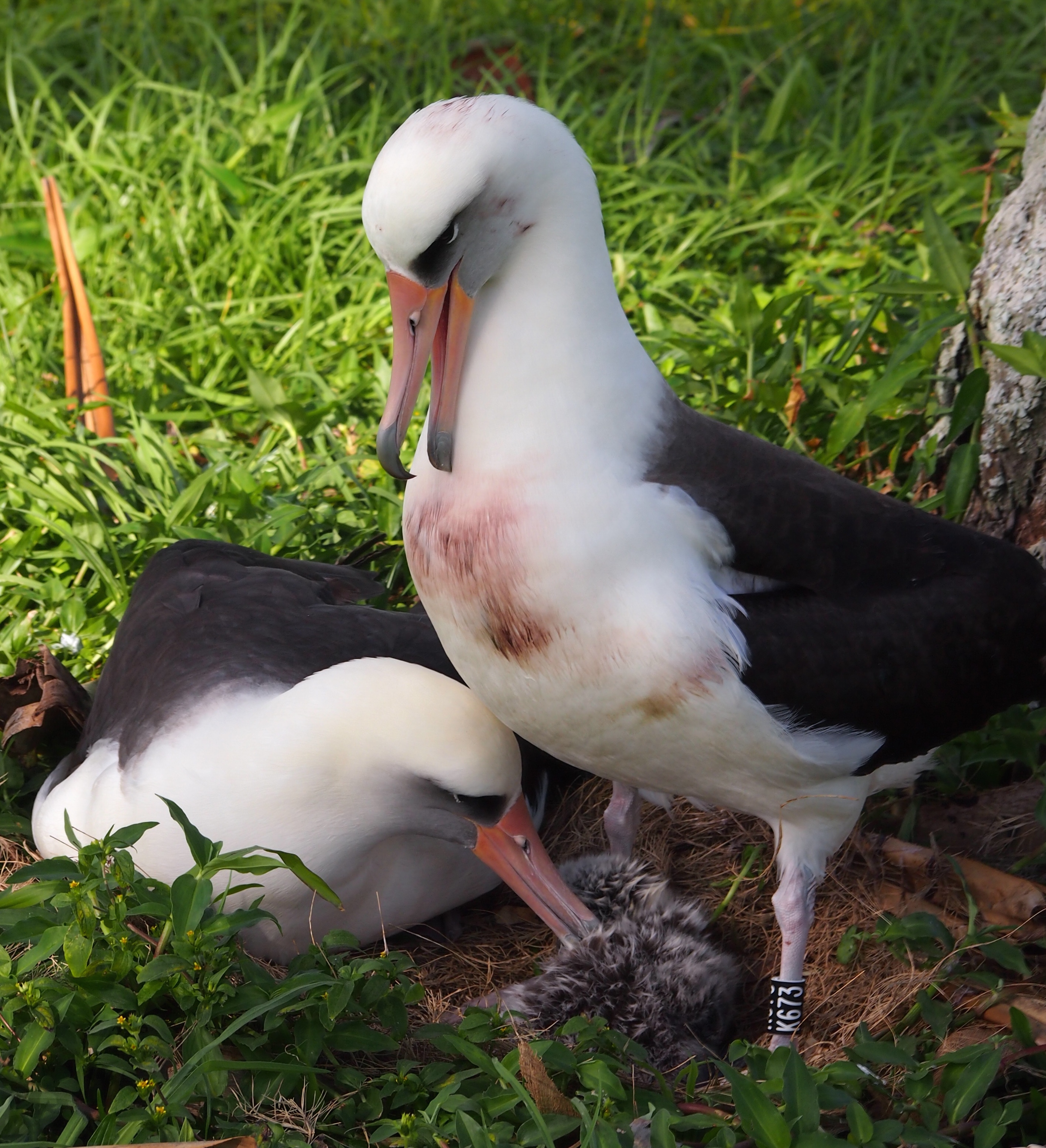
KP462 came back to her nest to relieve her mate, K673. K673 had been at the nest for just 2 days, although from the amount of mud she had accumulated one would think she was there for a much longer period.

KP462 comes to relieve K673 at the nest

KP462 comes to relieve K673 at the nest

When the chick is pipping or has hatched, the parents change much more frequently than they did when there was just an egg to sit on. At this stage they can find enough food close to Kaua’i to feed the tiny chick his pre-digested meals. As the chick grows and requires an increasing amount of food, the parents will forage further and further away from Hawaii and spend more and more time away from their growing young one.

Posted in Uncategorized | 3 Comments

Cuteness

We now have 8 chicks, and 4 more are in the process of hatching. There will be more after that, too. Last year we had 10 chicks total.

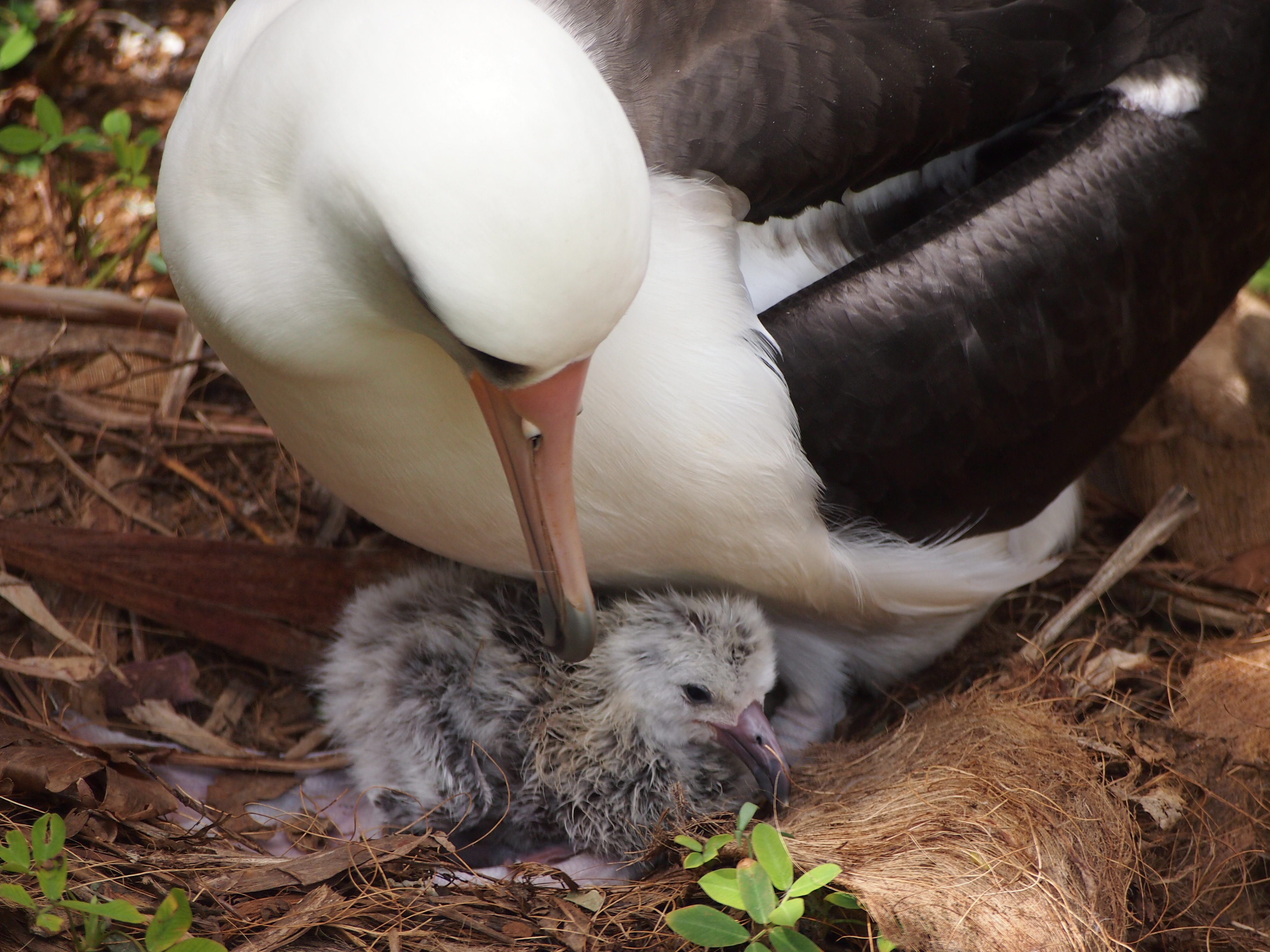
Here are a couple of photos of KP618 and his chick:

KP618 and chick

KP618 and chick

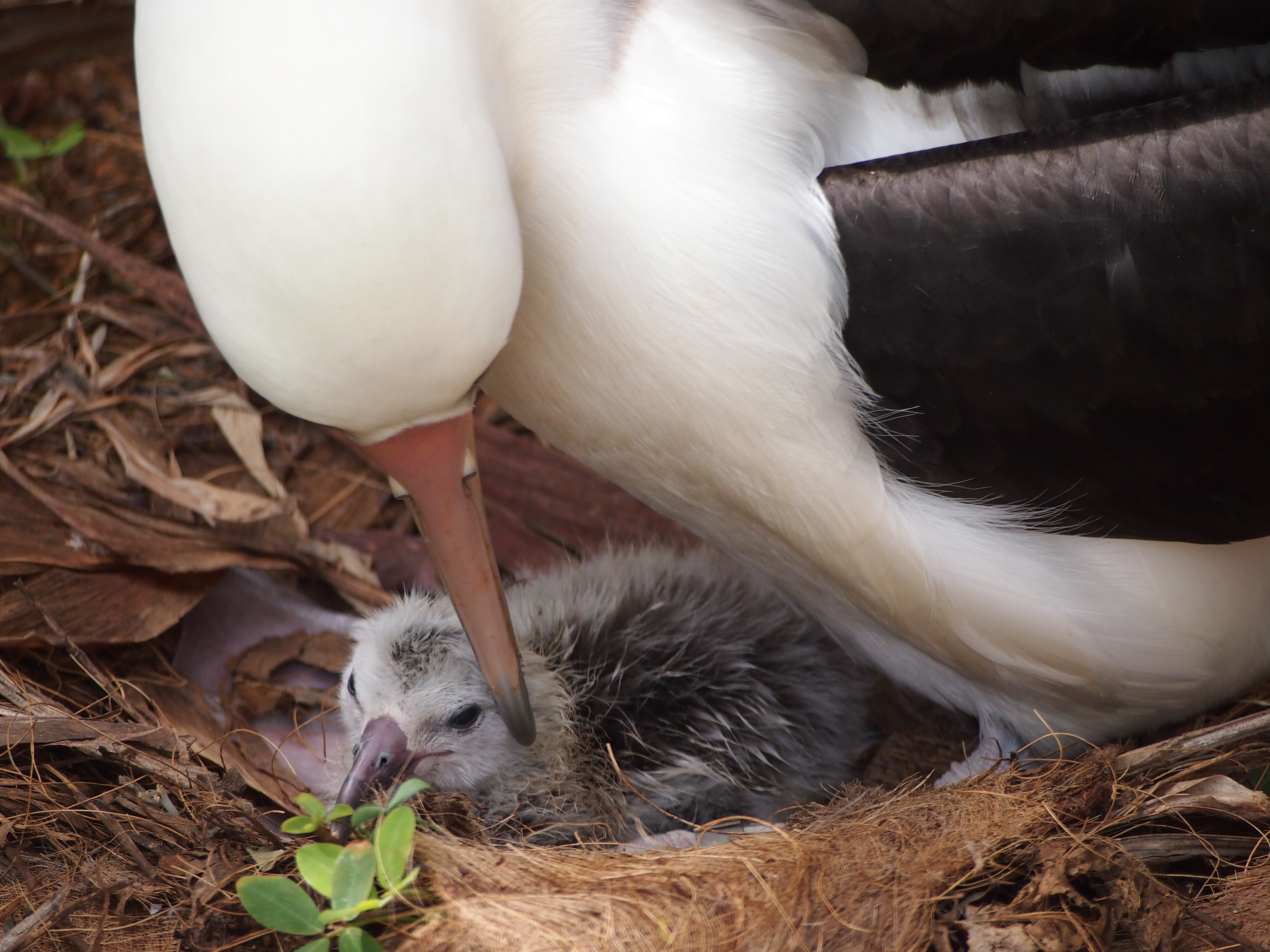
KP618 grooms chick

KP618 grooms chick

Lindbergh finally made an appearance. I often see new parents standing over their chicks, giving them some breathing room but ready to sit back on them should any possible threat to the chick appear.

BluKP080 and chick

BluKP080 and chick

I stay far from the nest if it is raining because it is so important for the nest to remain dry. The parent must stay on the chick to keep him warm.

Posted in Uncategorized | 1 Comment

Albatross babies!

The busiest time of the year for an albatross observer begins at the end of January. After 63 days or so of sitting quietly in their eggs, the chicks begin to make their way out into the world. The parent on the nest will not help, other than to offer words of encouragement. The chick develops a horny growth on top of his bill, called the “egg tooth,” which will help him to break through the hard shell.

Meet Lindbergh, who is just beginning to make his way out into the world.

Lindbergh pipping

Lindbergh pipping

The white spot on his bill is the egg tooth. It will fall off eventually, after he has used it to break out of the shell.

Last year his parents nested for the first time. Something was wrong with their egg, it broke during the early stages of incubation. I hope that this is the first of many chicks to come.

One of the first chicks to hatch is in my neighborhood. His parents have raised 4 chicks in the last 9 years, they are experienced pros. This is the father, KP730, standing over his chick.

KP730 with his chick

KP730 with his chick

And here is a closeup of the chick:

Closeup....

Closeup….

If nobody minds seeing fluffy chicks in all their cuteness, I will be showing more photos like these in days to come. If anyone does object, please tell me, what is wrong with you?

Posted in Uncategorized | 4 Comments