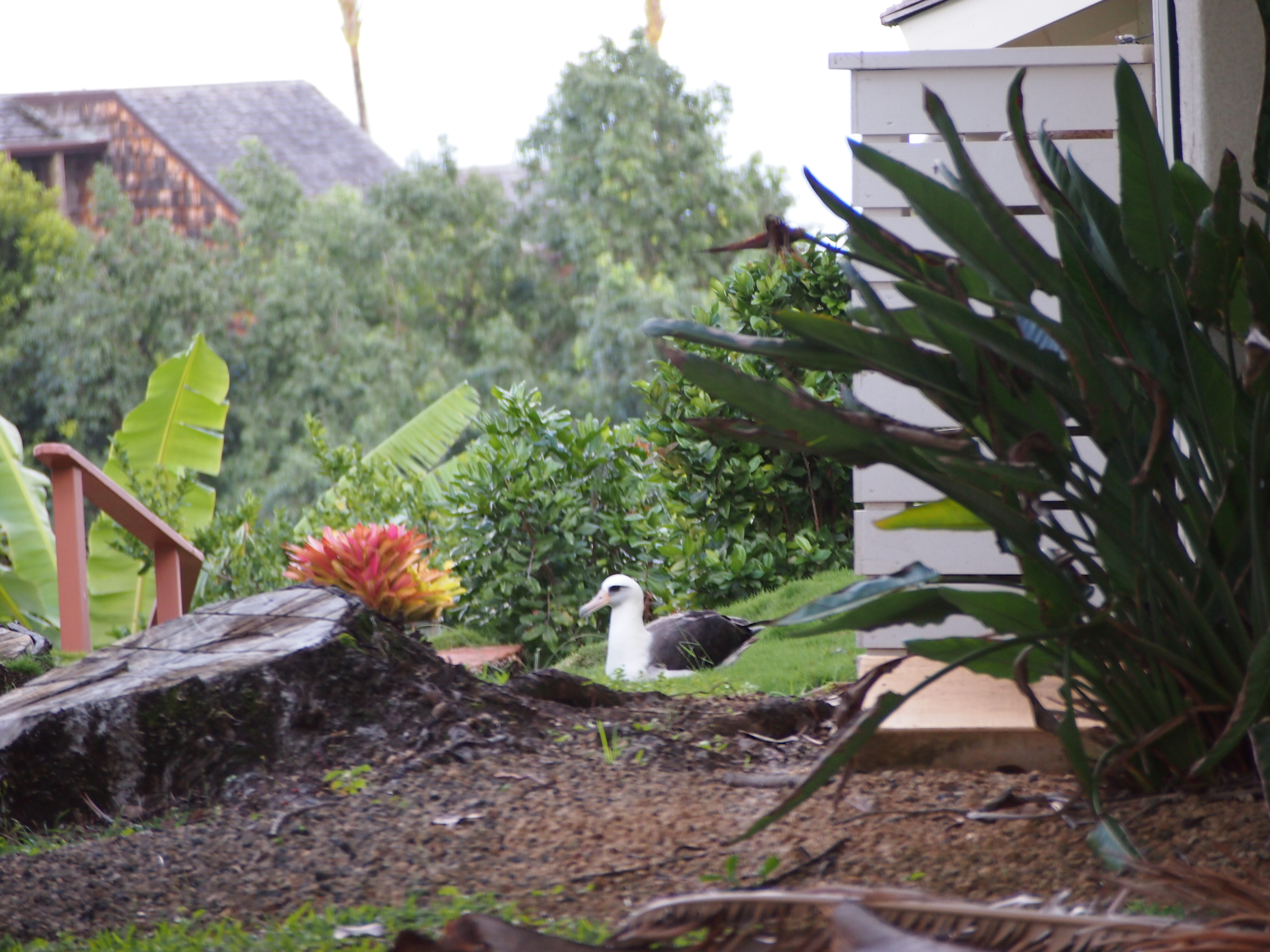
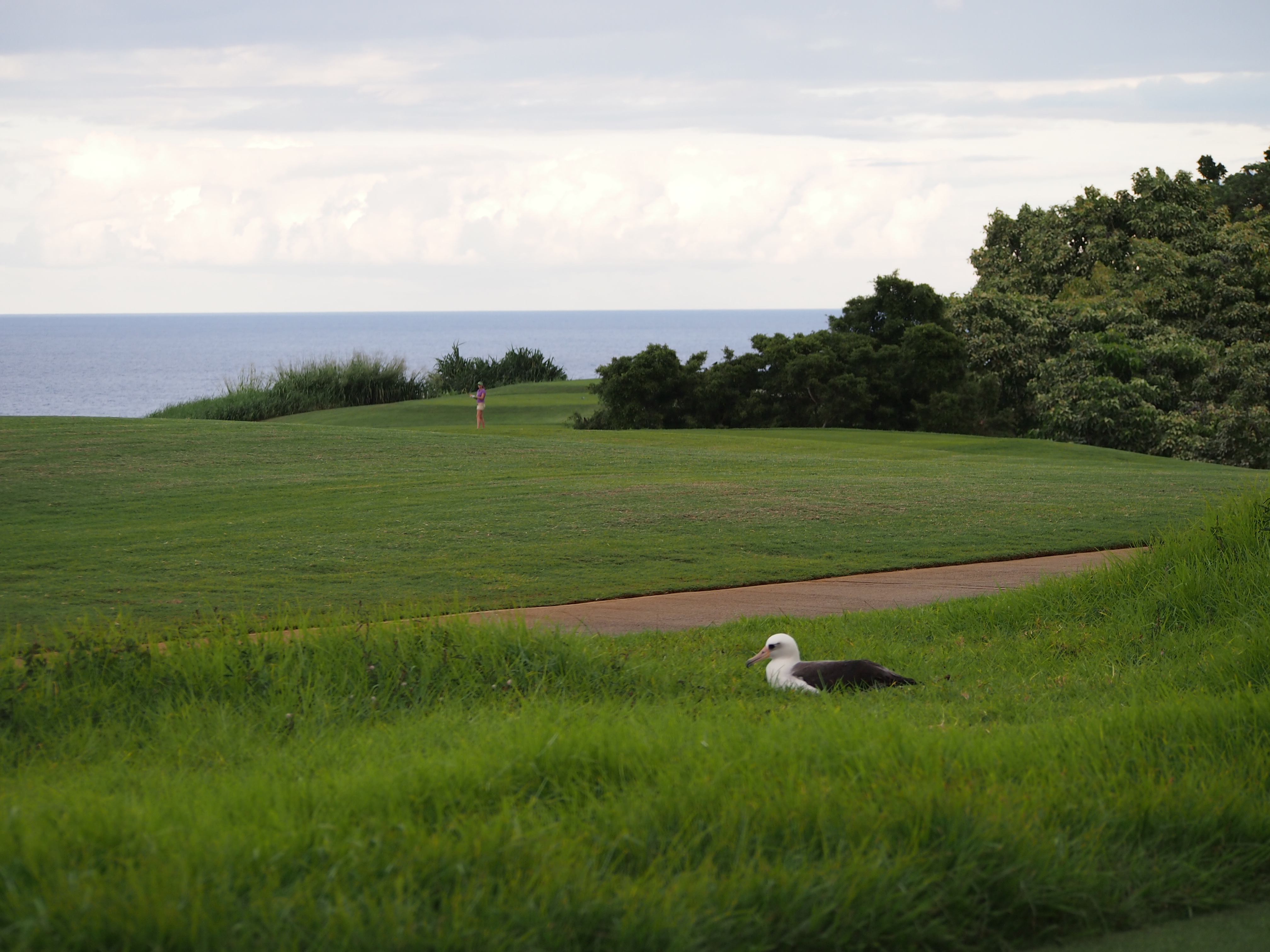
Update to post about KP531

If you check under the December archives, you will see “KP531 makes a big decision.”  I tell the story of a male whose long-time mate, KP467, was sitting on his egg while he sat on the egg of a female he met last season when KP467 was not around.

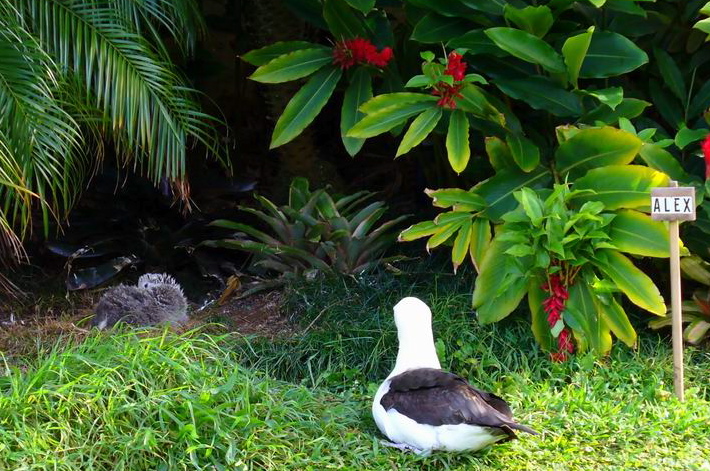
In the late afternoon yesterday, after sitting on her egg for a month, KP467 abandoned her nest.  In this photo you can see the abandoned egg, with an occupied nest in the background.

Abandoned nest of KP467

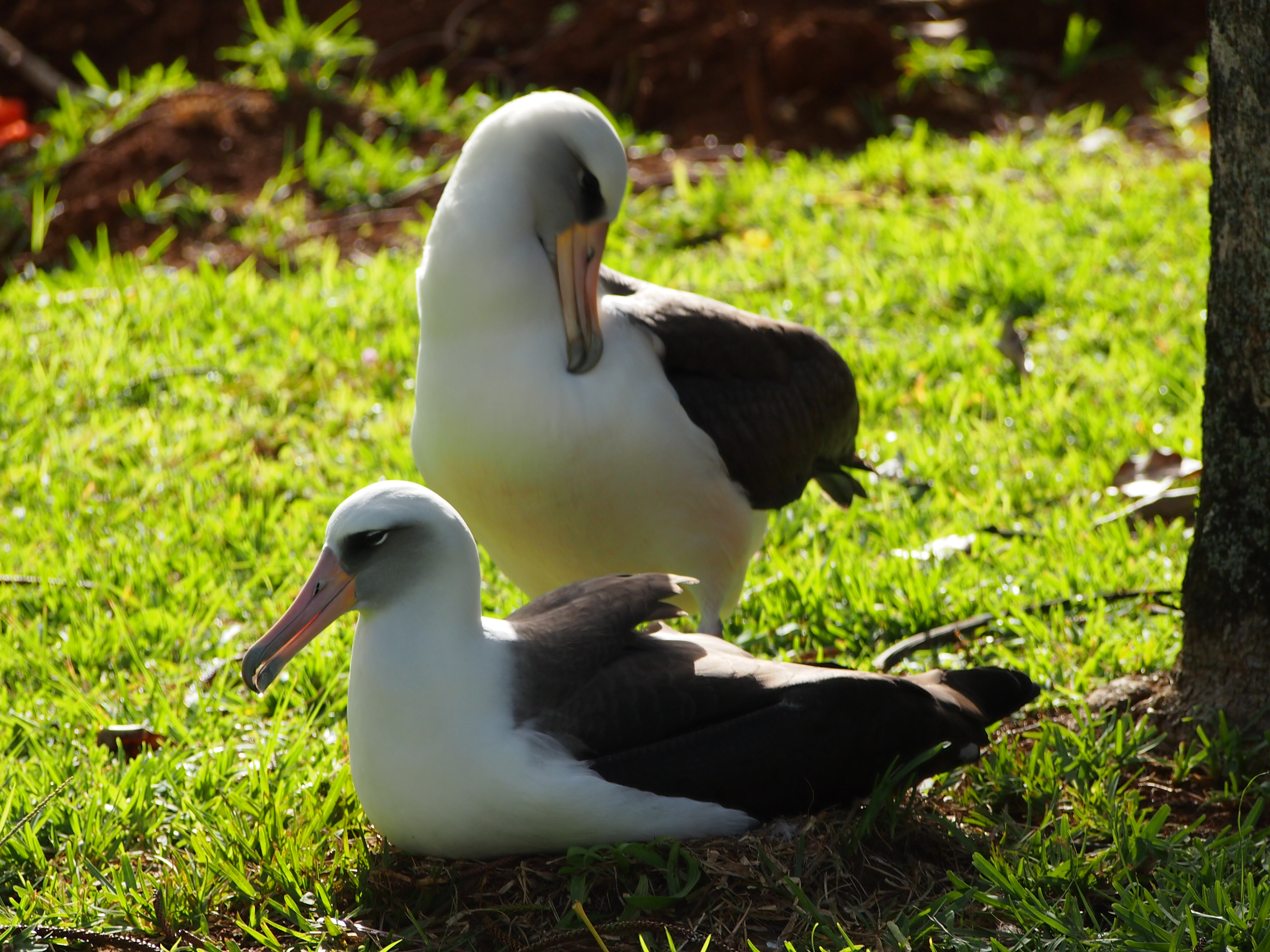
Yesterday KP531 continued to sit on his new mate’s egg.  Today when I checked the nests in that area, there was a bird on the egg KP531 has been incubating, and another bird was about 15 feet away.  That bird was KP531.  I walked towards the nest to verify that his new mate,  K112 was on the egg.  As I did, KP531 ran over to the nest before I could get there and stood protectively over K112 and their egg.  He has definitely chosen K112 over the mate he was with for at least 7 years.

KP531 standing next to K112 on nest

I always leave abandoned eggs for a few days in case the bird comes back.  I don’t like to interfere with the albatross way of life.


Posted in Uncategorized | Leave a comment

Egg swap in Princeville

This week was an important one for the albatrosses of Kaua’i.  The birds sitting patiently on bad eggs which will never hatch have been given a second chance at parenthood.  I have already written about the high number of female-female nests here.  Out of 33 nests in Princeville that were not immediately abandoned, at least 10 have female-female nesters.  Chances are there are even more of them, but these 10 couples have either been DNA tested for sex or had 2 eggs in their nests.  An albatross can only lay one egg at a time; if there are 2 eggs at a nest there are 2 females.  Occasionally these pairs have fertilized eggs, but they often have infertile ones, as do some of the male-female couples.  The couples with infertile ones have been given eggs from other albatross nests that are located near airfields at the PMRF, the U.S. Navy’s Pacific Missile Range Facility.

For a short article that is packed with information about this “egg swap,” including the reasons for removing the eggs from the nests at the PMRF and an explanation of how the eggs are “candled” to determine viability, I refer you to an article written by Dr. Lindsay Young.  Dr. Young is the North Pacific News Correspondent for ACAP, the Agreement on the Conservation of Albatrosses and Petrels, “which seeks to conserve albatrosses and petrels by coordinating international activity to mitigate threats to albatrosses and petrel populations.”  She wrote this article for ACAP about this year’s egg swap.  She and her husband, Dr. Eric VanderWerf, candled all of the eggs here in Kaua’i.

http://www.acap.aq/index.php/en/news/news-archive/24-2011-news-archive/820-sixth-year-for-the-laysan-albatross-egg-swap-on-kauai-hawaii-deemed-a-success

Lindsay and Eric are wildlife biologists who specialize in the study of birds.  They run Pacific Rim Corporation, an organization dedicated to restoring and maintaining biological diversity in the Pacific Islands.  Between them they have a vast knowledge of the seabirds and forest birds that make Hawaii so unique.  Dr. Young is the project coordinator for the Kaena Point Ecosystem Restoration Project, a special area that is home to a variety of seabirds including Laysan albatrosses, the subjects of many of her papers.  This year the first predator proof fence in the United States was installed at Kaena Point, and Lindsay and Eric are already seeing improvement in seabird survival rates.  Their website is:

http://pacificrimconservation.com/

My neighbor Bob Waid took some photos of the candling in Princeville.  You can see those and read a description of them at his website:

http://www.albatrosskauai.com/blog%202011%2012%20dec/index.html

Princeville received 8 PMRF eggs this year.  Of the 8 couples receiving them, 6 are known female-female couples and at the other 2 nests 3 of the 4 nesters are of unknown sex.   A total of 33 PMRF eggs were placed at the Kilauea Point National Wildlife Refuge and in nests on private properties.  This is the most that have ever been placed.

This project would not have happened without the support of the U.S.Navy.  They have biologists who have taken on the responsibility for running this egg swap by putting eggs from PMRF nesters in an incubator and monitoring them until they could be placed in nests on the North Shore.  They also arranged for Lindsay and Eric to come here from Oahu to candle all of the eggs and to replace the bad ones.  They did not have to do this, and they are to be commended for taking on these tasks to help to strengthen the population of Laysan albatrosses on Kaua’i.

Posted in Uncategorized | Leave a comment

Albatrosses and abandoned eggs

Abandoned eggs hold a great fascination for albatrosses.  I often find one or two birds at these sites, touching the egg, sometimes sitting on it, definitely curious about it.  In the following video, the unbanded bird on the left seems to be interested in the egg only, while the bird with the green band seems drawn to both the egg and to the other bird.

Posted in Uncategorized | Leave a comment

Albatross nest sites

The choice of nest locations is an interesting facet of albatross behavior.

This nest was in a shady, private spot, not too close to the street.

Alex on nest, February, 2007


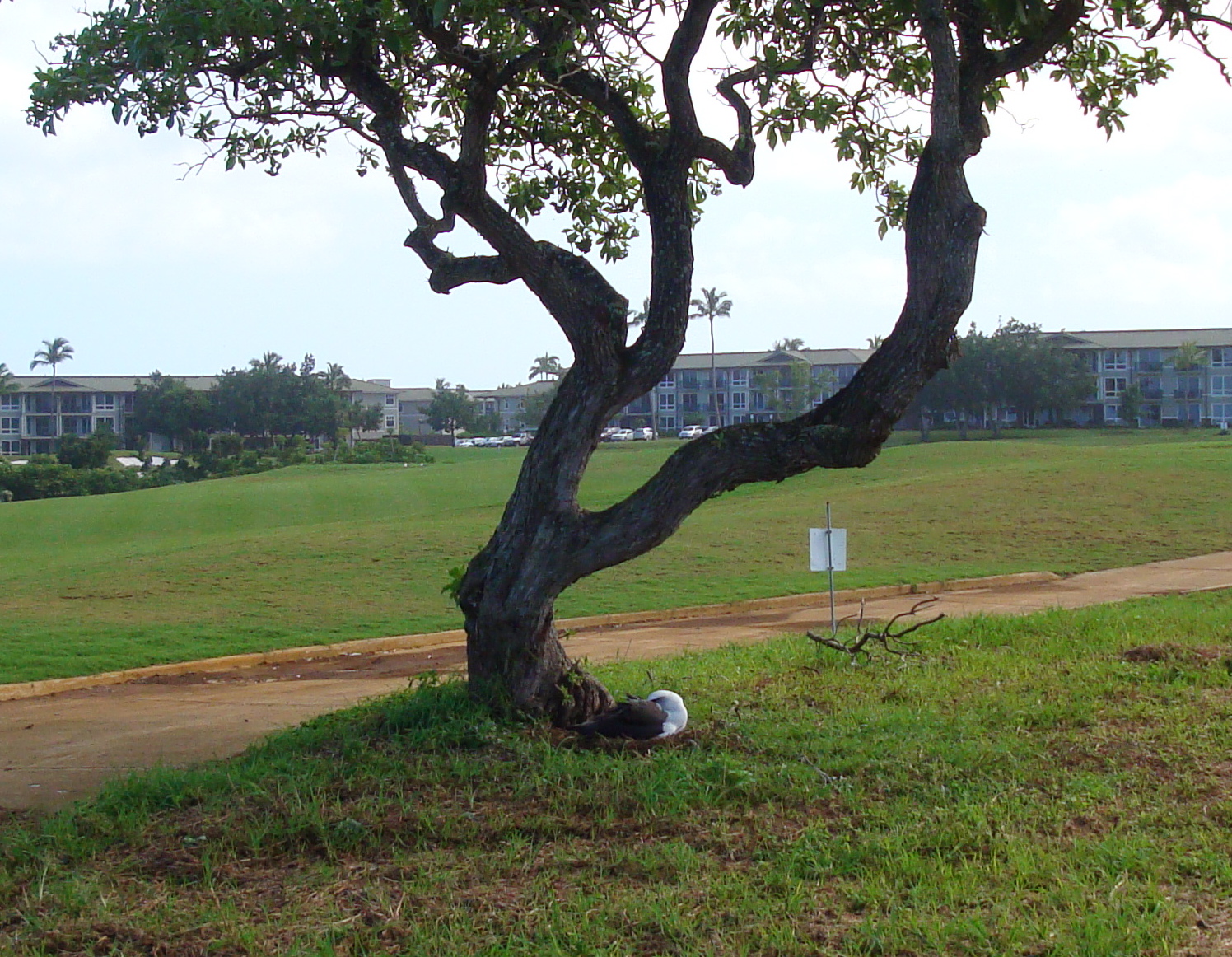
This nest was under one of the only trees around…

Nest on Lakes course

While this one was in the middle of an empty lot, with no shade at all.

KP515 in the middle of an empty lot


And this, of course, is the perfect nest—-invisible to the naked eye (or even the non-naked eye!)

Secret nest


Posted in Uncategorized | 1 Comment

Albatross Architecture

There are some birds whose nests all look generally the same.  Laysan albatrosses do not fall in that category.  The architecture is a mixture of available materials and personal preference.  Sometimes the couple builds a nice nest before the egg is ever laid, sometimes the egg precedes most of the nest building, which goes on around it.  Here are a few nests to illustrate the variety of styles.

This female did not spend much time working on the nest before the male took over incubation duties:

680 sitting on her new egg

Her mate plucked the grass around him to build the nest:

731 sitting on his nest

This nest is a combination of dirt, the surrounding vegetation and the flowers from the tree it sits beneath:

The nest of 304 and K674

The female built this nest while waiting for her mate to relieve her, using lots of dirt and a bit of grass:

513 waiting for 641 to return

This nest was built by the chick who is sitting in it.  He used the fruit and fronds of a hala tree, a type of pandanus native to Kaua’i.  Building these structures allows the chick to practice using his bill, which will help him when he fledges and must learn to catch his own meals in the ocean.

Nest 27, June 2011


Posted in Uncategorized | 1 Comment

Nests in Princeville

As of yesterday there were 30 nests in Princeville.

Of these, there are 3 nests on a property where I am not allowed to collect data.

I found one egg abandoned on the golf course. There was a bird sitting nearby that may or may not be a parent.

Another egg on the other golf course was also abandoned.  The first day I found it a bird was sitting on it, the next day it was abandoned, and the following day a different bird was sitting on it.  I can’t say who the parents are.  Albatrosses are attracted to the abandoned eggs, and will often sit on them.

Of the remaining 25 nests:

21 are nests of couples that have nested together before:

2 have one parent who has nested before and one who has not

2 have two parents who have not nested before

10 of the couples at these 25 nests are known to be female/female couples. I know the sexes of some of them for several reasons:  DNA sex tests were done here for several years; others were observed laying their eggs; others can be identified as two females because they had two eggs.  An albatross can lay only one egg.  Sometimes these female partners each lay an egg in one nest, sometimes they build separate nests for their eggs. In these cases, one bird lays an egg and the second one takes the first incubation shift, just like the male does in a female/male couple.  When the first bird leaves, the second one moves to another location and lays her own egg.  When the first bird comes back she will sit on the egg her partner laid, which will be nice and warm.  Often both females’ eggs are unfertilized; sometimes at least one is fertile.

Yesterday I found a new female/female nest arrangement.  The first female laid her egg but the second one did not take over incubation of that egg.  Instead, she went next door and laid an egg there.  I can’t see either one abandoning her egg; the first one doesn’t even know about the second nest.  Now will both birds wait for the other to take over incubation of her egg?  If so, both eggs will eventually be abandoned.  I have never seen a couple do this before, and these females have been nesting together since 2005 so they are not nesting novices.  This does not seem to be a very smart arrangement and it makes my head hurt just thinking about it.

There may still be a few more nests that I am not expecting. Even checking every day, I can miss seeing couples reunite when they first come back here. They do not waste any time doing courtship displays, and may meet, mate (if a male is involved) and leave before I see them. They leave for about 8 days, and then return to nest.  Couples in Princeville always stay in the same general areas where they nested previously, two residential areas and two golf courses that are on the ocean.  Some of them always return to the same yard or golf course section, others move their nests to different sites within the four big areas.  A bird who loses a mate may relocate to another area, find a mate there and have future nests there.  I think they will eventually expand the areas where they nest, but for now they have plenty of room.

I’m sorry if this all seems rather confusing, but the more I observe them the more I see that they do not always fit neatly into the simplified descriptions we humans like to impose on them.

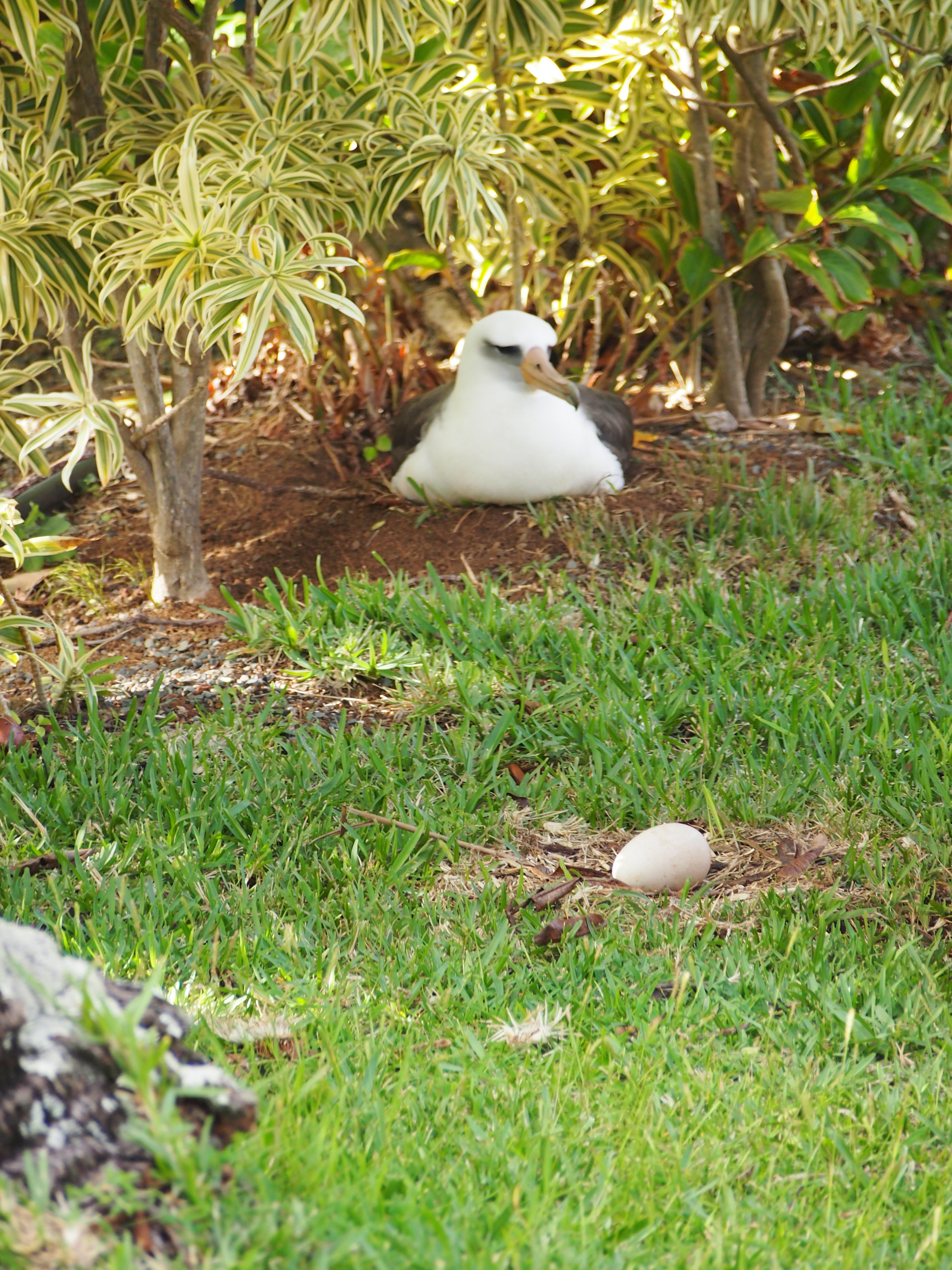
Although they have lots of room for nests in Princeville and generally prefer to nest far apart, this season I have two nests that are quite close to each other. The nest on the left has already been abandoned by the male, who is sitting on the egg of the second mate he met last season while his first mate was gone.  I wrote about this couple in my last blog entry.  The bird on the right is taking the first, longest incubation shift while his mate is out building up her strength after laying their egg.

KP467 and K233 on their nests

Posted in Uncategorized | Leave a comment

KP531 makes a big decision

KP531 and KP467 have raised chicks that fledged in 2004, 2006, 2007, 2008, 2009 and 2010.  Not a bad record.  And now KP531 has chosen not to sit on his mate’s egg, which she has been sitting on now for at least a week;  instead he is sitting on another female’s egg,  the female he spent time with last season when KP467 was gone.

I want to understand what the biological advantage is to this behavior.  He knows his former mate will be a good parent, she has never failed.  I even looked at my data for the last year they raised a chick and there was nothing unusual in their incubation pattern, they shared duties equally.  Yet he is leaving his long-time mate for one who has never nested, at least not in Princeville.

Until I started observing these albatrosses almost every day they were here and going over my data when I saw something that was unusual, I thought they were basically all the same, behaviorally.  Boy, was I wrong.

They are much more interesting than that.

KP531, KP467 at separate nests

In this photo, he is in the foreground.  KP467 is the bird facing away from him in the background.

Posted in Uncategorized | 3 Comments

The soap opera continues…

This is a continuation of my last entry, for November 27th.  I was discussing the whole albatrosses-mate-for-life thing, and told the story of KP467, who laid her egg a week ago and has been waiting for her long time mate, KP531, to take over incubation duties.  Last year he spent some time with K112 and I also saw them sitting close together and quietly grooming each other this season.  K112 was gone for about a week and she just returned.  And laid an egg.

Tomorrow I will go see if KP531 has chosen which egg he will be sitting on, and by extension, who will be his mate and who he will raise a chick with.  Of course, even though I collect my data and record it in a manner befitting an impartial observer, the totally non-scientific, all too human part of me will still feel a little sadness for the female who is rejected.

I’m closing today on an upbeat note, with a photo taken by John Erwin from his second story lanai next to the golf course.  They really are beautiful birds, aren’t they?

photo by John Erwin

Posted in Uncategorized | 1 Comment

Albatrosses mate for life (?)

Both in 2007-08 and 2008-09 KP505 and his mate raised a chick; the following season he returned in November but his mate did not return until January.  By January, he had already met KP792 and they had spent more and more time together, sitting quietly and grooming each other, the quiet contact that is typical of a nesting couple.  Last year KP505 and KP792 were the first albatrosses to return to Princeville and they raised a chick that was named Coconut.  Last week they both met up on the lawn where they had a nest last year.  After an albatross couple mates, they usually leave for about eight days and then reunite on land around the time the female lays the egg.  They should return here any day.

KP505’s first mate was KP729.  Sometimes last season she would sit near the nest he had with his new mate.  Today I saw KP729 sitting in almost the exact spot where that nest was.  Was she waiting for her former mate?

KP729 sits near former mate's nest site

Down the street from her there are two nests quite close to each other.  With all the available lawn space around here, I would have thought that the second couple would have chosen another spot.

K233 and KP467 on their nests

The bird in the front, KP467, has been waiting for her mate to sit on her egg.  He is currently sitting in the next yard.  Usually when the male returns shortly after the egg has been laid, he takes over incubation duties, and his first shift on the egg is most often the longest one.  These two birds have been raising chicks for at least as long as I have been collecting data.  Last year they abandoned their egg.  KP467 left Princeville for most of the rest of the season, but KP531 stayed behind and spent some quality time with K112.  I saw them displaying together last week, then K112 left.  Is KP531 waiting for her to return?  Or will he take over incubation duty for his long-time mate?

Don’t these birds know that albatrosses mate for life?

There is a danger in assigning human attributes to animals like albatrosses.  They are not “bad” because they leave one mate for another.  They are not “good” if they stay with one mate forever.  It’s natural for us to feel sorry for the rejected mates but we’re just being human.  They, on the other hand, are just being albatross.


Posted in Uncategorized | 1 Comment

More albatross updates

Every day I see more albatrosses.  It is more important than ever that people obey the leash law here.  A dog may not notice albatrosses that are sitting or standing still, but sometimes one may suddenly start running.  It is a dog’s natural instinct to chase something that starts to move fast, and just one quick grab and shake could kill an albatross.  If you see any unleashed dogs in Princeville, please call Princeville Patrol.

For several days, KP728 has been wandering Kaweonui Road looking for her mate, K305. Last year they sat on an egg  until the end of February, but it never hatched.  For as long as I have been collecting data, they have been nesting together.  Here is KP728 waiting at one of her many resting places, next to a house on the bluff.

KP728 waiting for K305

I walked by a vacant lot not far from where she was sitting, and there was K305.  She was waiting near where the two had their nest last year.  It is times like these when I just want to go and pick one of them up and carry her over to the other one.  But of course I know that they will find each other eventually.  They always do.

When I checked the golf course today, I found two new eggs.  One was sitting next to, not under a bird.  This albatross is a female who has a female partner.  About 30% of the nesting couples in Kaua’i are two females.  Sometimes they each lay an egg, which may or may not be fertile, sometimes only one of them does.  This bird may have been sitting next to her mate’s egg and may be planning on laying one of her own.  Or she could be abandoning their only egg.  Of course I will check tomorrow to see the outcome.  Stay tuned.

I will end with KP680.  Even though I check the nesting areas every day, I miss seeing some of the returning birds because they are here for less than a day.  I had not seen her, but on several days I had seen her mate, KP731, and he was always sitting in a spot on a fairway, a terrible place for a nest.  Today I found KP680 sitting on an egg across the golf cart path from her mate’s favorite spot, in some nice, long grass, out of the way of golf balls and lawn mowers.  It’s a little close to the path, but the location is a big improvement over a fairway.

680 on her egg


Posted in Uncategorized | Leave a comment