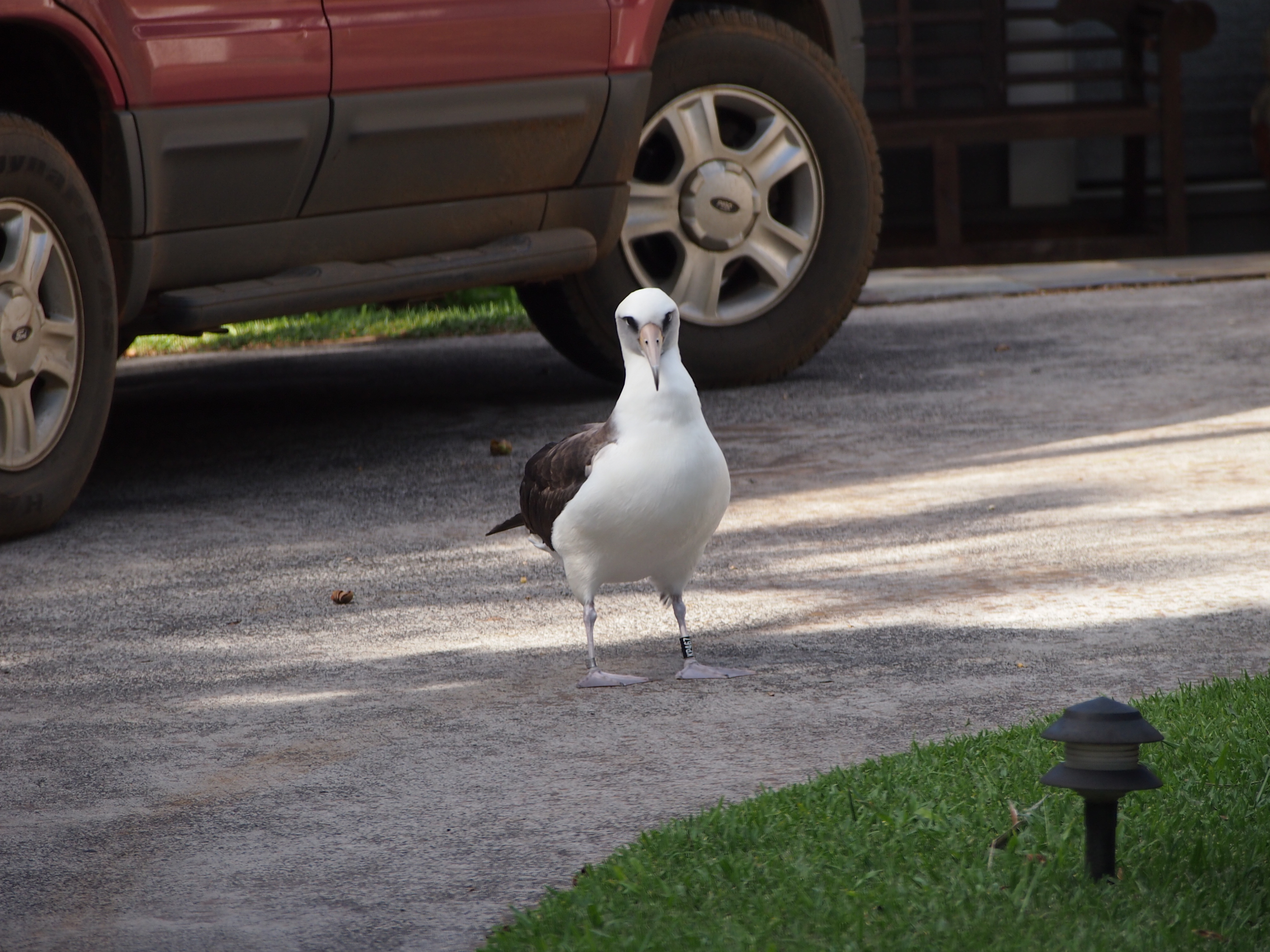
Updates on two females

KP467:

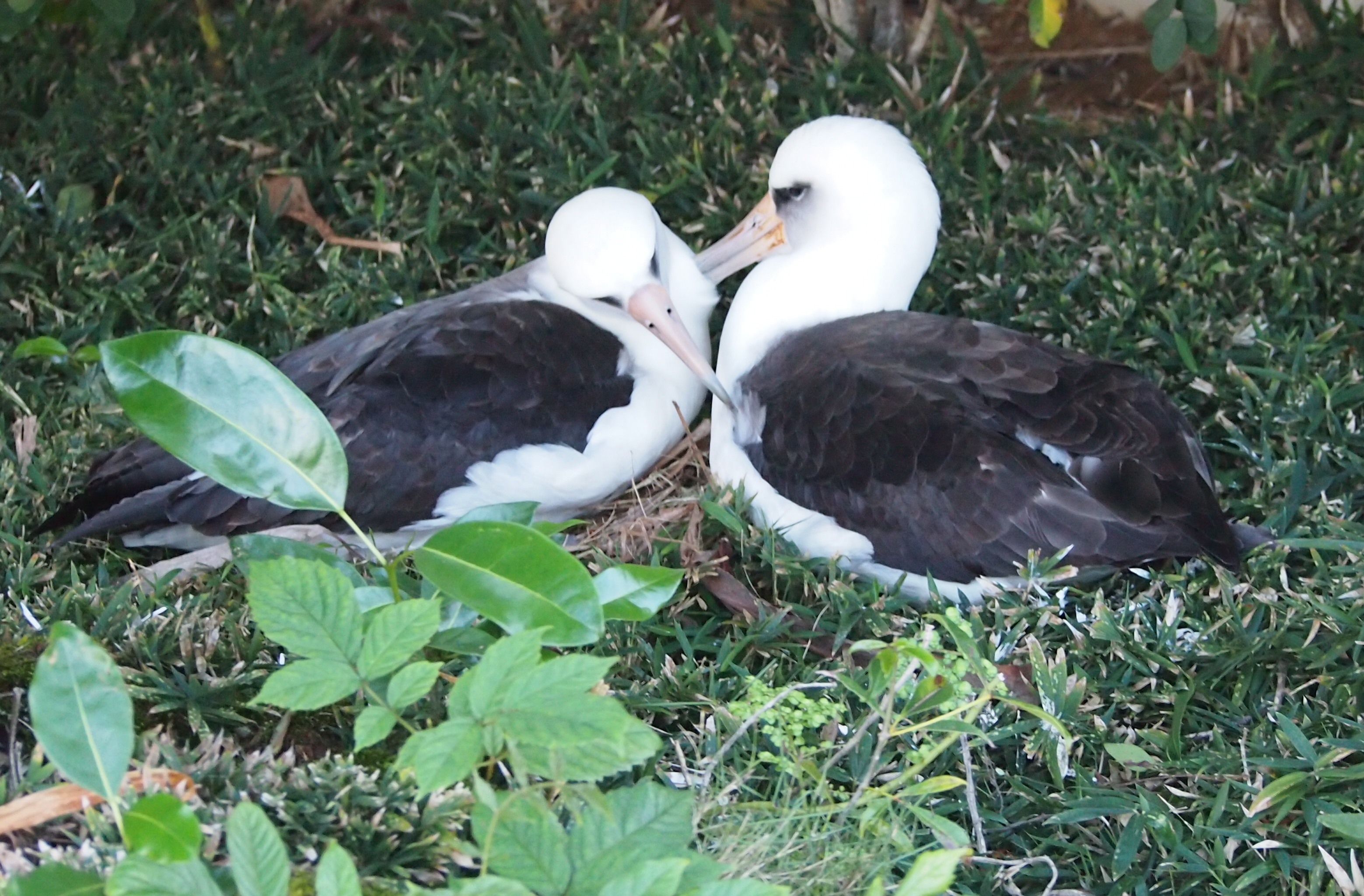
In my November 27th post I talked about KP467, whose long-time mate, KP531, had spent lots of time with another female last year while KP467 was away.  KP531 chose to sit on this other female’s egg, and after sitting on her own egg for a month, KP467 finally had to abandon hers to return to the sea and eat.  After about a week I started seeing her walking around the neighborhood again.

My neighbor, Bob Waid, actually saw KP467 go up to her former mate and snap at him, and Bob took a photo of KP531 snapping back at her.  You can see it on his website at:

http://www.albatrosskauai.com/blog%202012%2001%20jan/page14.html

Just to make this story sound like a scene from a movie about jilted wives:  KP729, whose mate also left her for another female, was walking with KP467 when she visited KP531.

KP679:

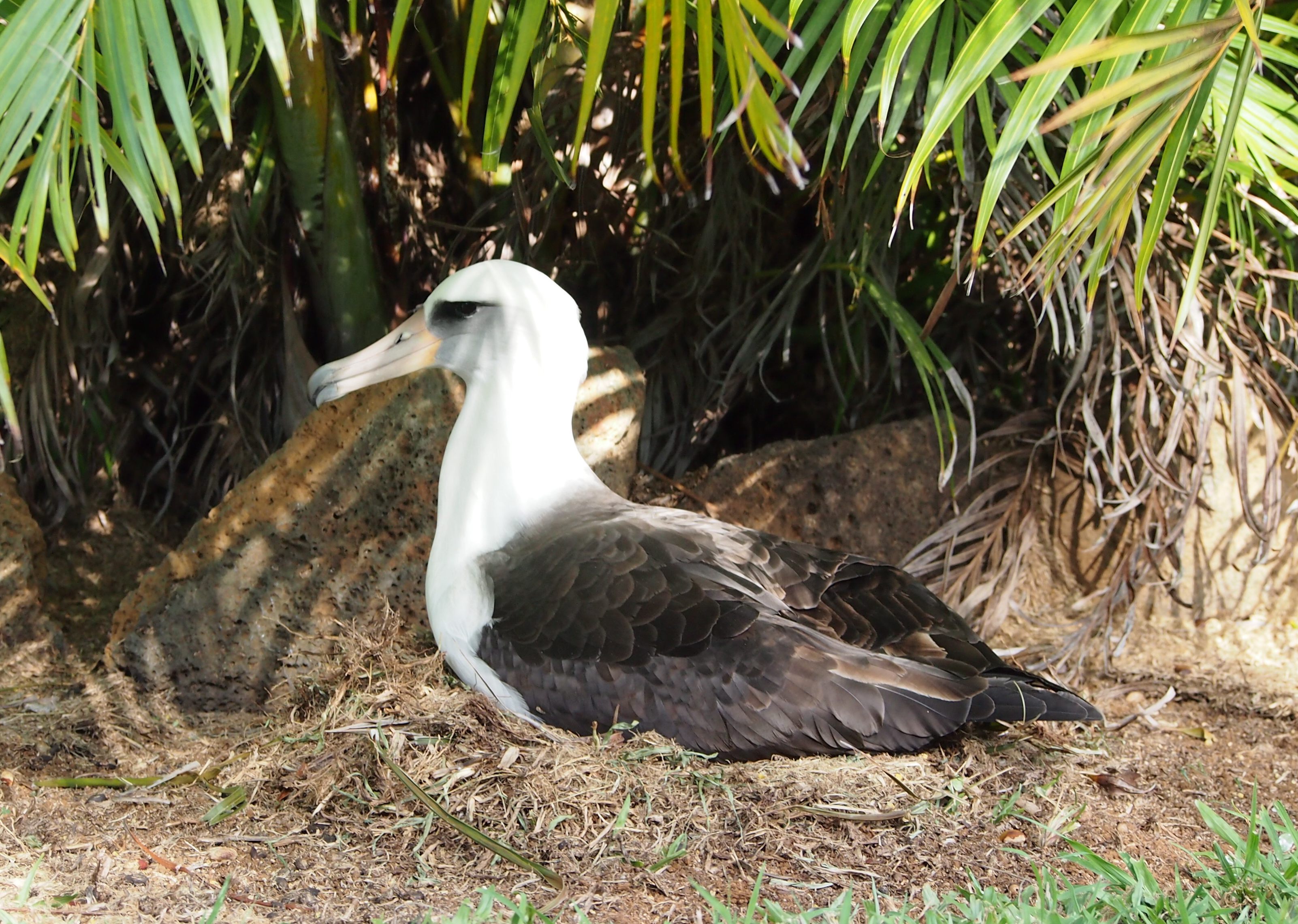
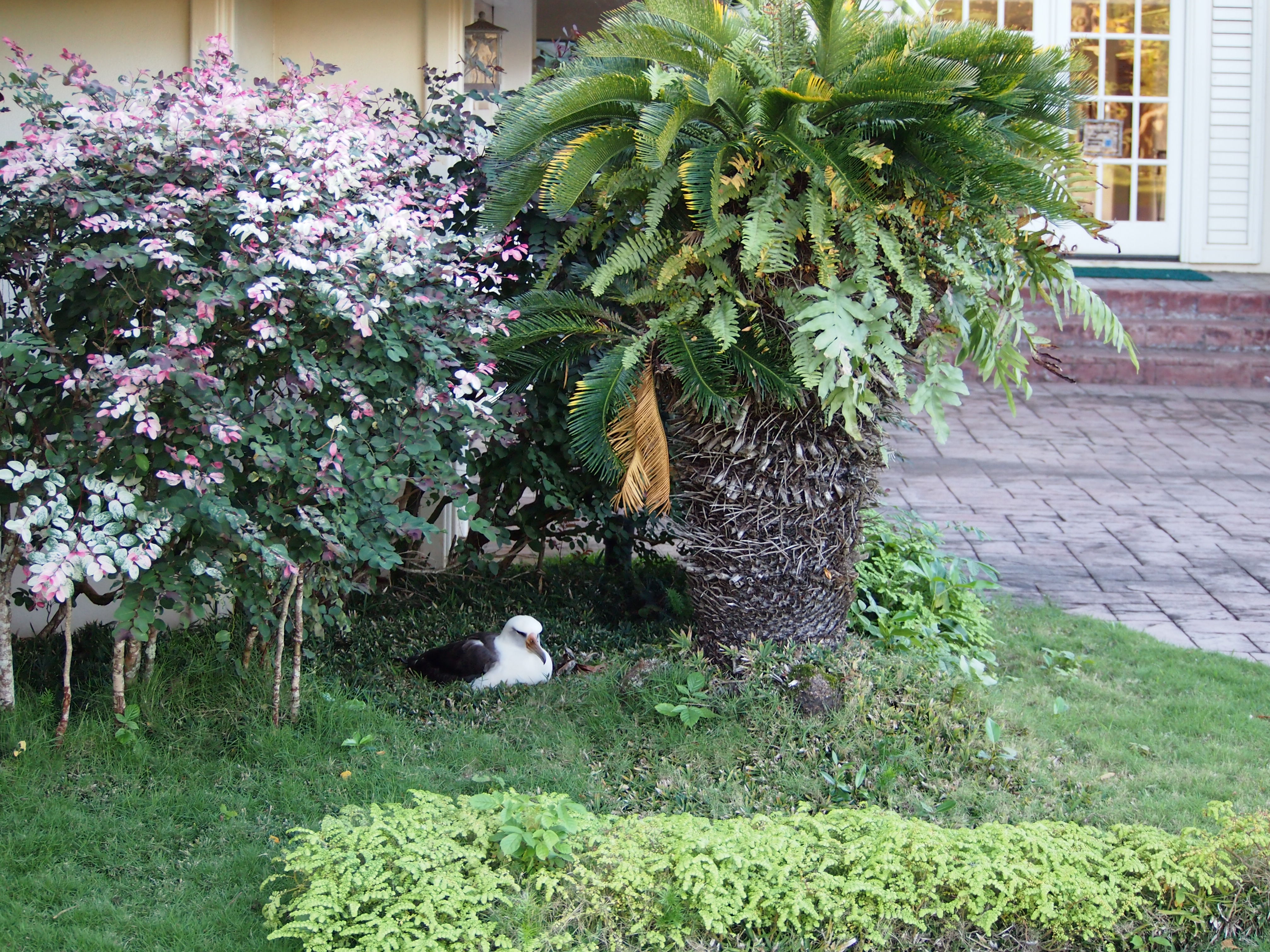
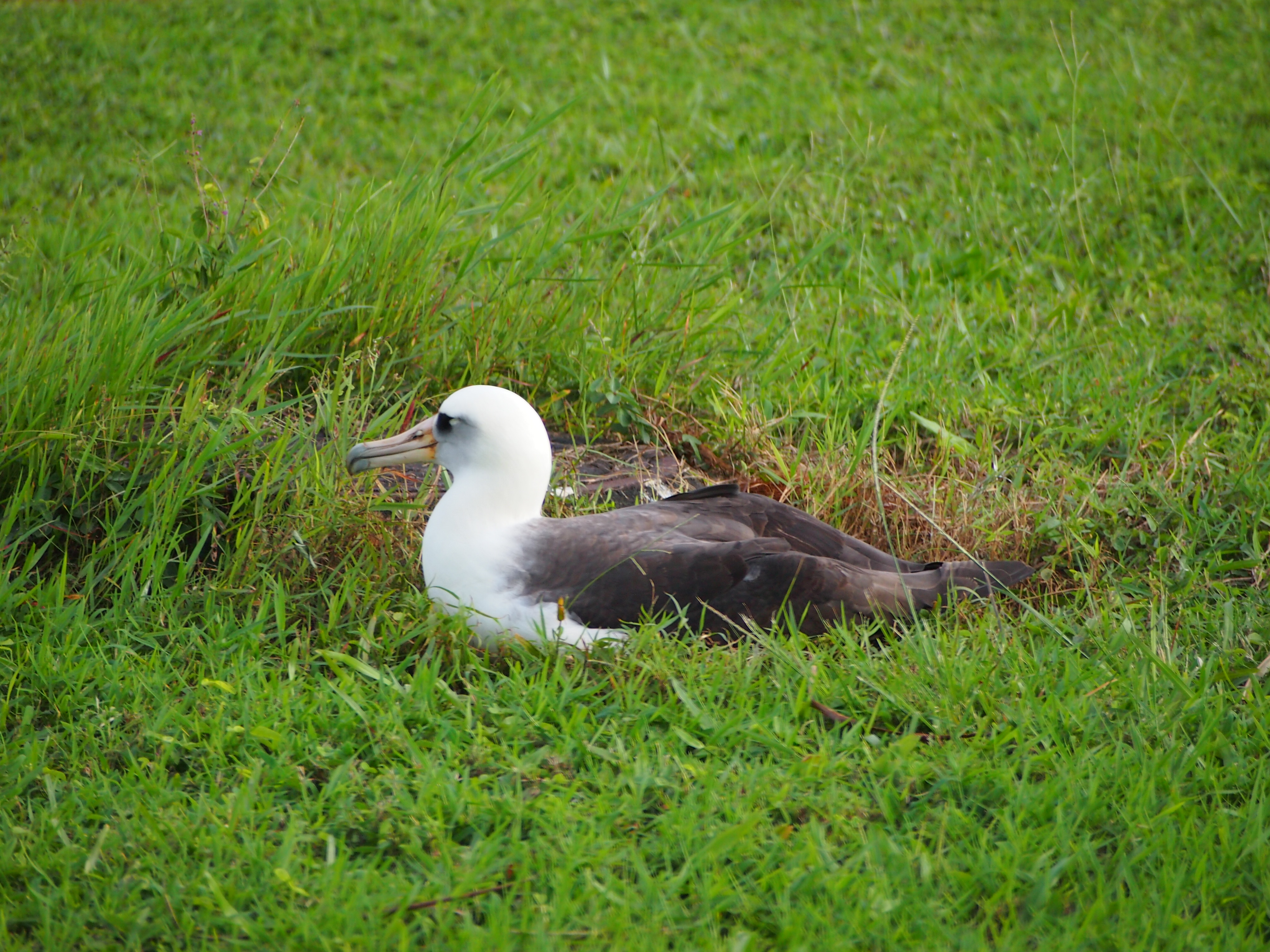
I featured KP679 in my January 3rd post, “Biography of an albatross.”  Sometimes females lay eggs when they have no apparent mate, at least not one who will help with incubation.  KP679 sat on her egg from December 18th through January 3rd, then left it.  I put a sign up asking people not to get too close to the nest because she might return to it.  She finally did, on January 24th.

KP679 returns to her egg

Posted in Uncategorized | Leave a comment

“Longshot’s widow,” the story of KP458

I found a crushed egg at nest 2 on the Lakes golf course on Saturday, January 15th.

This was an egg from the Pacific Missile Range Facility.  Every year albatrosses with bad eggs are given good ones from the PMRF.  (If you are new to this blog and want to know more about this “egg swap,”  please read my December 18th entry.  Or at least read Dr. Lindsay Young’s short article about this year’s egg swap in Kaua’i at http://www.acap.aq/2011-news-archive/sixth-year-for-the-laysan-albatross-egg-swap-on-kauai-hawaii-deemed-a-success.)  The egg appeared to have stopped developing at some point.  There were no chick parts in it, just liquid.  Sometimes bad eggs crush under the parent’s weight.

This nest belongs to KP458 and bluKP027.  Let me tell you KP458’s story.

Those of you who have lived in Princeville for 8 years or more may remember the Pepelani Loop before condominiums were built on it.  It was a half-circle of land with weeds and a few trees on it.  There were two albatross couples who always nested there, and they were forced to relocate during the 2005-2006 season when construction started on the condos.

One of those couples was KP458 and Kp495.  They built a nest across from the Pepelani Loop, near the main road through Princeville.  It was close to a bike path that is used every day by residents and visitors.  Tour buses would pull off close to the nest, and dozens of people would get out and stand close to it.  Volunteers from the lighthouse would sometimes sit at a safe distance from the nest to try to convince people not to get too near.  Some people cannot be convinced that the very act of staying too close to an albatross can be detrimental to its health.  It was a very stressful environment.

Unfortunately, KP495 was hit be a car and suffered serious injuries.  Someone gave him the name “Longshot” because the odds were against his survival.  He never did fully recover and eventually he died.  That left KP458, now known as “Longhot’s widow,” with a chick to raise by herself.  Both mother and chick would run the risk of also being hit by a car, and I have only ever seen one chick successfully raised by a single parent after the other one disappeared.

At the time of KP495’s accident, 10 Laysan albatross chicks from Midway were being hand-raised by Japanese scientists at the Kilauea Point National Wildlife Refuge.  Japan was trying to preserve their endangered population of short-tailed albatrosses, most of whom nest on islands.  Many of them nest on an island that has an active volcano, and the scientists wanted to move some of the chicks to a safer island and start a new colony.  If they moved the adult nesters to the new place, the birds would fly back to the nesting area they were used to.  The safest option for the scientists was to move chicks to the new place and hand-raise them there.  Albatrosses are known for returning to the place they fledged from, so these chicks would be the pioneers of a new, safe nesting area.

The scientists did not want to practice their hand rearing techniques on the short-tailed albatrosses and run the risk of losing any of them.  Midway is home to hundreds of thousands of Laysan albatrosses, and the U.S.Fish and Wildlife Service agreed to let the Japanese scientists perfect their techniques on 10 Midway chicks which would be flown to Kaua’i and kept safely at the Kilauea Point National Wildlife Refuge.  Since they were already feeding the 10 Midway chicks, it was easy for them to add just one more.  KP458’s chick was brought there in April for hand rearing and later fledged successfully.  As far as I know, this female has not yet returned to Kaua’i, but she will probably return to the refuge when she does come back.

I would like to add that the translocation of short-tailed albatrosses in Japan has been a resounding success, thanks to the handling and feeding techniques the scientists learned while working with the Laysan chicks on Kaua’i.

That season I did not see KP458 again.  However, she was the first non-nester I saw in the 2006-2007 season.  For 18 days she waited near the place where her nest with KP495 had been.  But there were no other albatrosses who visited that area regularly.  She started to join the birds on the golf course, and spent more and more time with another female, bluKP027.  Eventually I saw them displaying together and quietly grooming each other, the behavior typical of mates.

For the next 4 years, KP458 and bluKP027 nested together on the golf course.  They never had a good egg, and they were given PMRF eggs every season but last year.  The first year the chick started to hatch out of the wrong part of the egg and died.  The following year, the chick hatched but died of an unexplained injury.  In the 2009-2010 season the chick hatched successfully and fledged.  Last year they abandoned the nest 3 days after the egg was laid. Many eggs were abandoned last year.

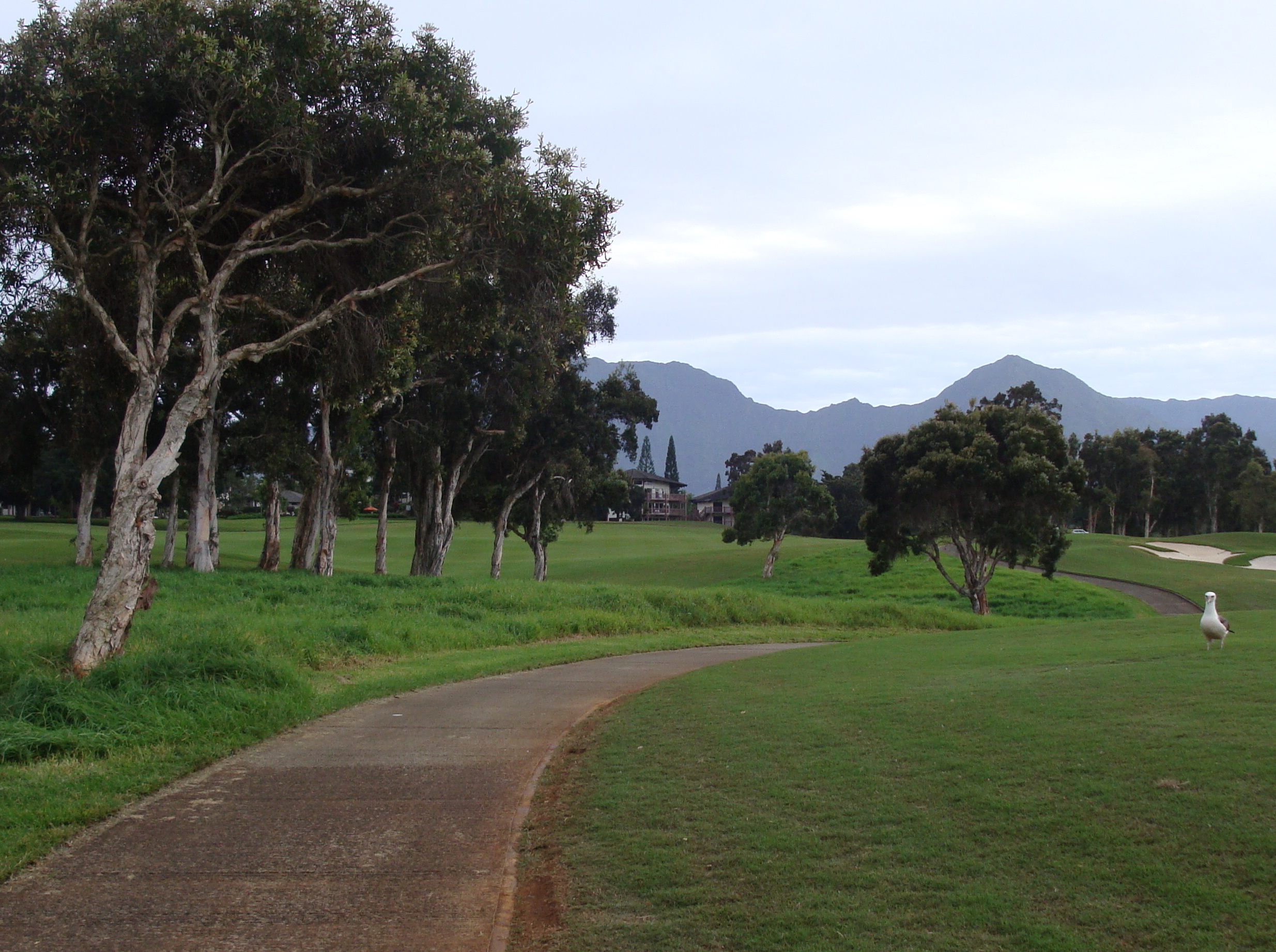
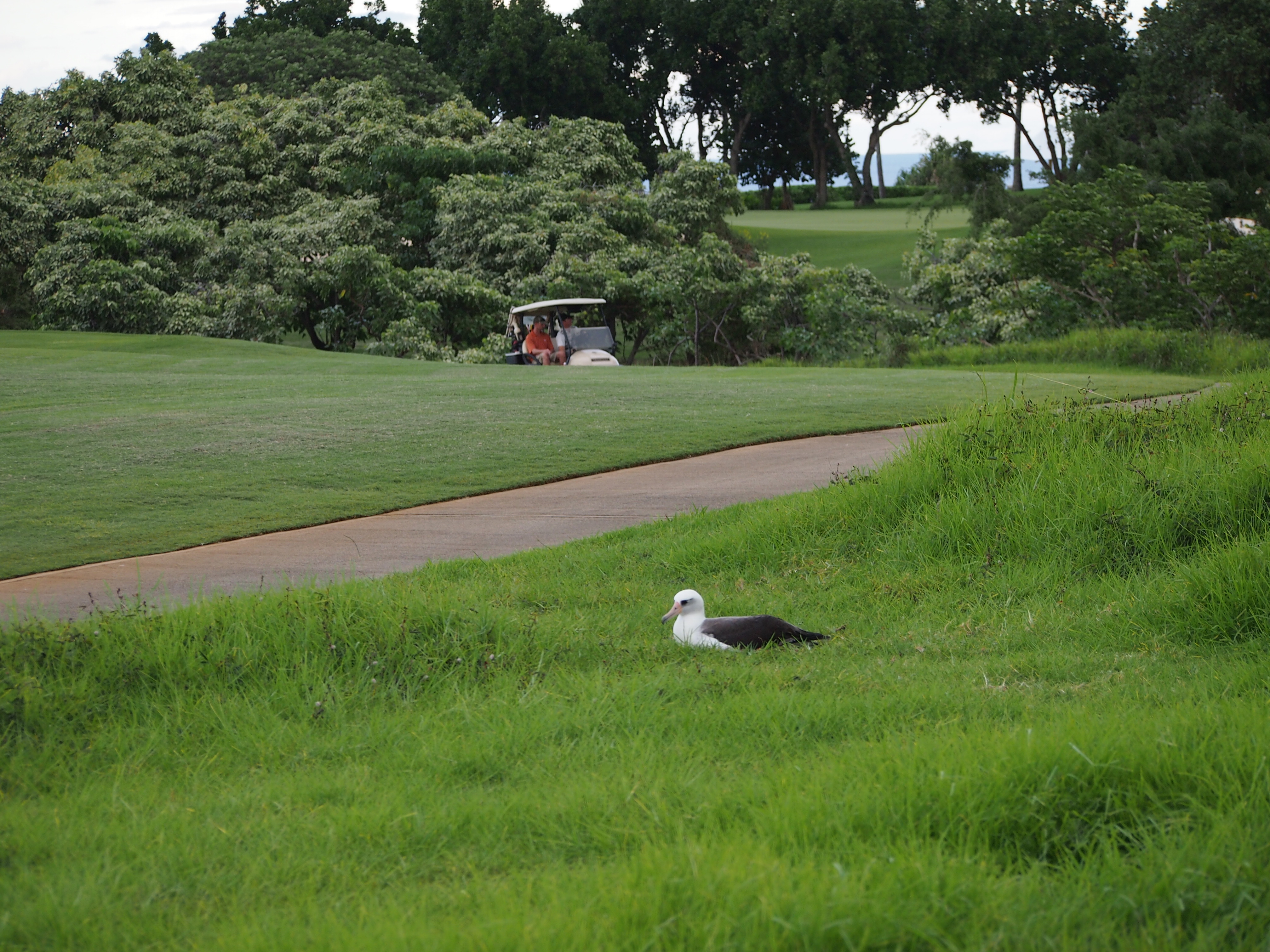
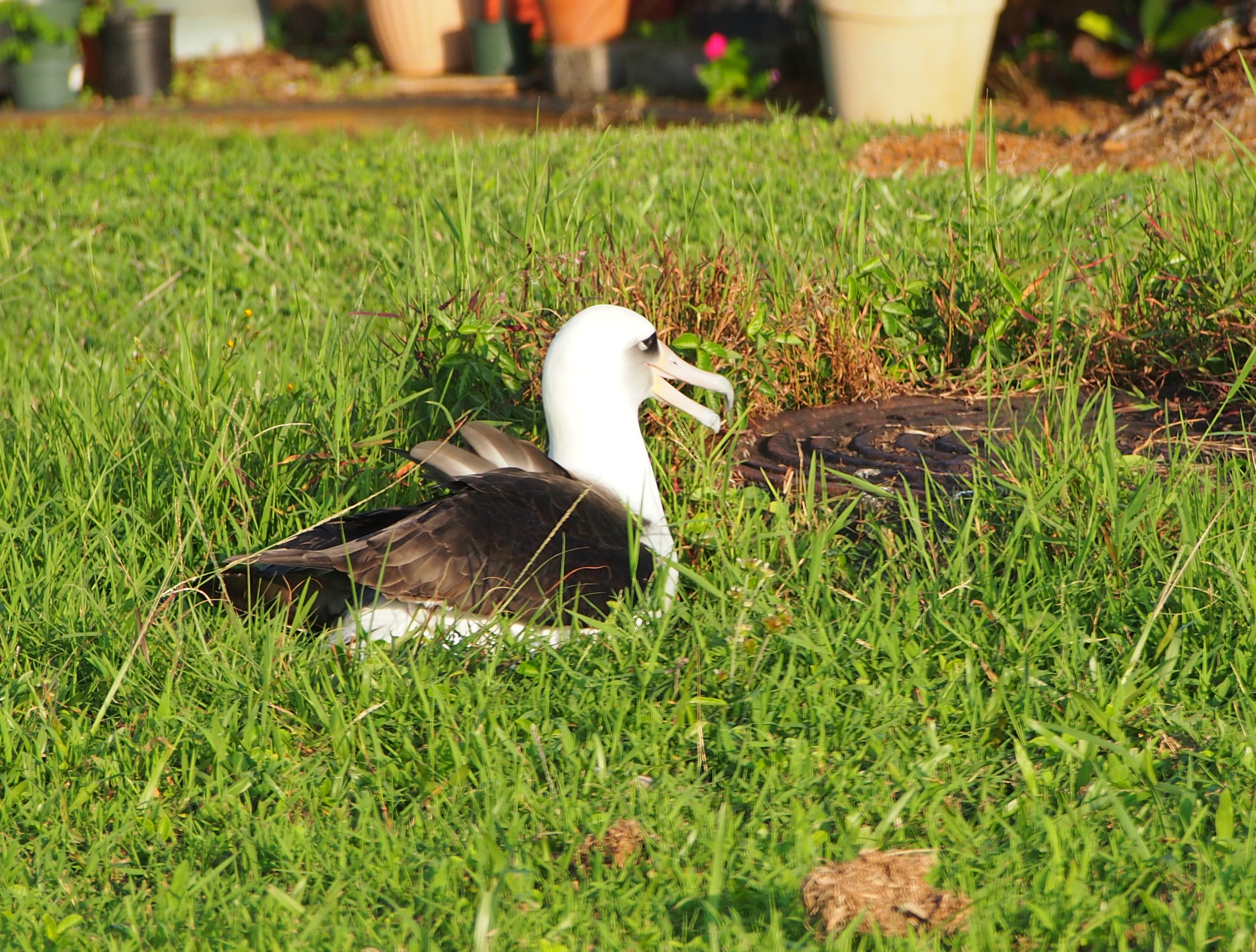
This year they were taking turns incubating another PMRF egg, the one which I found crushed in the nest.  The whole time I was checking out the remains of the egg, KP458 was staying in the area.  In the photo below, you can see her to the right of the golf cart path.  The nest is in front of the first tree on the left.  As of yesterday, January 20th, she is still hanging out near the nest, probably waiting for her mate to return.  Albatrosses do not place blame on each other if something goes wrong during incubation.  Experienced nesters like these two will just want to spend time with each other, renewing their bond so each knows that next season she can count on having a reliable mate to share the nesting, incubation, and hopefully chick rearing.

KP458 waiting near her nest, in front of tree to left

Posted in Uncategorized | Leave a comment

Albie Talk

If you are an albatross, this is what you do when you see another albatross flying overhead and you really want him to come down and join you:

Posted in Uncategorized | Leave a comment

KP470 learns correct albatross behavior

My last entry told the story of KP470, a female who has laid eggs year after year with no one to help her incubate them.  This year she has a mate, KP735.  After KP470 had sat on the egg for over 30 days, KP735 arrived and took over the incubation duty.  That was at the beginning of this week.

Usually when the mate returns to sit on the egg to relieve the one who took the first, longest incubation shift, the one leaving will be gone for about 3 weeks, to feed and build up strength.  But KP470 never had a partner before, and she obviously has not read the albatross literature, because she was back at the nest on Friday.

KP735 on nest, KP470 waits her turn

I expected to find KP470 on the nest when I checked it on Saturday, but I was wrong.  KP735 was alone, still sitting on the egg.  KP470 is learning proper albatross etiquette from her new mate.  This is not a trivial lesson.  When the parents start leaving the chick alone, they will be spending all of their time finding food for themselves and for their progeny.  They will not have time to lollygag at the nest.  KP470’s job right now is to fly out over the ocean and spend enough time there to replenish the nutrients she lost during all those days she spent on the nest.  Once the chick has hatched, she will need all of her strength to fulfill her job as an albatross parent.

It is not an easy job!


Posted in Uncategorized | 1 Comment

Nesting outcomes, good and bad

In this blog entry I refer to PMRF eggs.  For those of you who have not read all of my posts, please refer to December 18th for a discussion of the PMRF egg swap which takes place on Kaua’i every year.

———————————————————————————————————-

I mentioned that there were two nests with females whose mates had not yet returned to take a turn incubating their eggs.  In the last two days I saw the outcome for these two, KP513 and KP470.

KP513

KP513 has been nesting with her mate since the 2007-2008 season.  I’m afraid KP641 never returned to take his turn incubating.  I have not seen him since November 24th, and I assume he did not make it back.  Yesterday I found the nest abandoned.  I left her egg there, because she may return to sit on it briefly before finally accepting that this nesting season is over for her.  Other birds may use the egg as part of their courtship displays.

Eventually KP513 will start to socialize with other birds.  There is a wide variation in the behavior of albatrosses who have lost mates.  Some seem to start looking for a new one right away, others take several years to find one.  Some birds never find a mate in the area where they always nested; they may move to another place in Princeville to continue the search.

I hope KP513 finds a good one.

KP513 sitting on her egg

KP470

I have observed KP470’s nesting behavior since the 2005-2006 season.  In that period, as well as in the next four seasons, her life in Princeville followed this pattern:

She always had her nests next to or in the middle of the Oceans golf course.

I would see her sitting near a male, KP471, then 8 to 10 days later KP470 would be sitting on an egg.  I never saw them display together, or even sit touching each other, but he was the only bird in close association with her.  8 to 10 days later she would be sitting on an egg.  Sometimes the egg was fertile, sometimes it was not.

KP471 would never incubate KP470’s egg, nor would anyone else.

Eventually KP470 would abandon the egg.  One time she sat on it for 43 days before leaving it, another time she incubated her egg for 54 days.  That is definitely the incubation record for Princeville.

Last year, KP471 did not return to Princeville at all.  It was the first year since I have been observing her that KP470 did not have an nest.  I saw her display with a few birds, twice with another female, KP735.  The only “quiet contact” typical of mates that I saw her engage in was also with KP735.  So when I found her sitting on an egg this December, I was hopeful that she had finally found someone to share incubation with her.  A few days later KP735 was in the nest with her and they were gently grooming each other.  But the next day, KP735 was gone and there was a second egg near the nest.  KP470’s egg was candled and found to be infertile, so she was given a PMRF egg.

Once again, KP470 was stuck with the first, generally longest incubation shift.  I started to worry when she reached the 30-day mark.

KP470 on her egg

Yesterday KP735 was sitting on the egg!

I sincerely hope that all of our PMRF eggs hatch this year.  But if I could choose only one or two, the very un-scientific but very human part of me would want to finally get to see KP470 raise the chick that she has spent so many days of her life waiting for.


Posted in Uncategorized | 1 Comment

Interesting statistics

For January 6, 2011 and January 6, 2012 I compared the number of nests abandoned and the number of couples still incubating their eggs:

Year                Incubating couples           Abandoned nests       Percentage abandoned

2011                                    17                                    11                                    39%

2012                                    28                                    9                                    24%

I would not be surprised if more nests are abandoned this season.  I have two females whose mates have not yet returned to sit on the egg, and I have nests with 7 new couples this year, 2 of which have already been abandoned.  It is not unusual for some new parents to abandon their first nest.  There are 7 couples with PMRF eggs; I have never seen 100% of these hatch successfully.  Still, it looks like we will have a larger number of chicks fledge than the 10 we had last year.


Posted in Uncategorized | Leave a comment

Update to “Biography of an albatross”

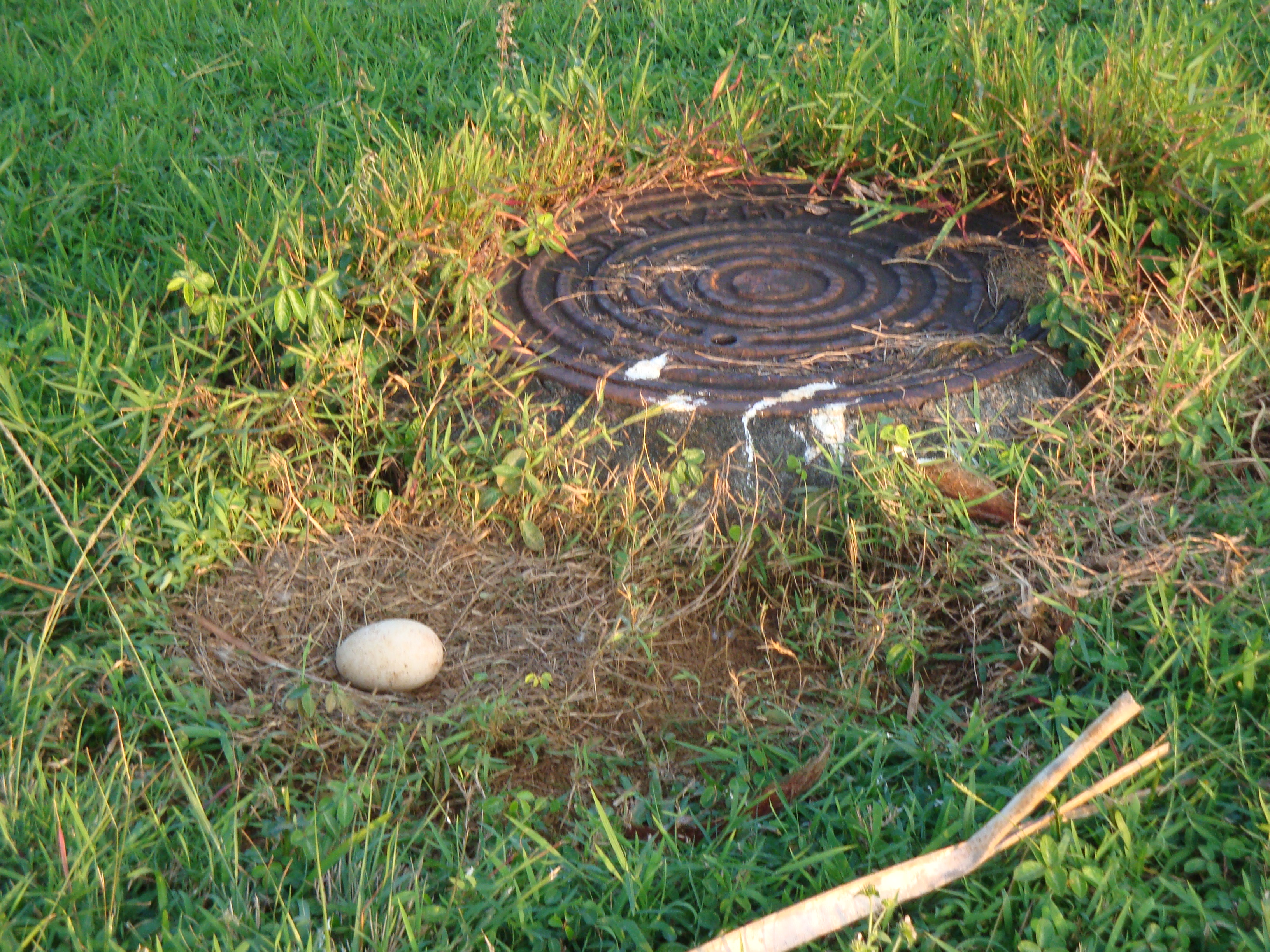
KP679 abandoned her egg today.  I left the egg in the nest in case the she decides to come back.  Please, if you see an abandoned egg, stay at least 15 feet away as you would if you saw the parent sitting there.  The parent may be scared away if people are too close to the nest.  Even if the egg is no longer viable, it may be important for her or him to sit on it again.  Sometimes the other birds will use an abandoned egg in their displays with each other, also.  In my December 15th post, “Albatrosses and abandoned egg,” I show a film that illustrates their fascination with these eggs.

KP679's egg

Posted in Uncategorized | Leave a comment

Biography of an albatross

Today I am sharing the story of a female albatross with the band number KP679.  She has led an interesting albatross life so I thought I would share it with all of you.

I started to collect data on these birds during the 2005-2006 nesting season, so I do not know her background preceding that.

Usually the albatrosses that have nested here before are the first birds to return to Princeville.  Often the males arrive here before the females.  While they are waiting for their mates to arrive, they may mate with other females that are returning.  This is how some of the birds in the female/female couples end up with fertile eggs.

In 2005 we saw KP679 mated by a male, Kp641.  She left for about 8 days while he met up with his mate, KP513.  When KP679 returned she built a nest in my neighborhood and laid an egg.  KP641 never relieved her on the nest and she finally abandoned it after 37 days.

That same season KP731, a male, had a nest with his mate, KP680.  This couple nested in the vicinity of Punahele Road.  We used to call them Mr. and Mrs. Pastry Bird because someone had once left a Danish pastry by their nest.  For the rest of this post I will refer to them as Mr. PB and Mrs. PB so I don’t have to throw too many band numbers at you.

The following season, 2006-2007, Mrs. PB had a traumatic experience.  On December 6th I received a call that a gardener had seen a “big white bird” in a fenced off yard.  It was Mrs. PB.  I carried her out to a nearby empty lot and she immediately flew away.    Mr. PB had returned to Princeville on November 11th, and Mrs. PB probably would have joined him within the next week if she had not been trapped.  He was gone by the time she was freed.  Mr. and Mrs. PB did not nest that year, and when I saw them sitting a few feet away from each other later in the season they were not engaged in any of the “quiet contact” behaviors nesting couples normally engage in.  They looked like two albatrosses who had never met before.

Mr. PB started spending time on the golf course furthest from Punahele Road and he met KP679 there.  They started spending time together, displaying and sitting quietly with each other.  Mrs. PB spent her time on the other golf course, closer to the area where she had always nested before.

In 2007-2008 Mr. PB and KP679 nested together on the golf course and raised a chick who fledged successfully.  During this season Mrs. PB spent most of her time on the other golf course and in my neighborhood.

At the beginning of the 2008-2009 season I saw Mr. and Mrs. PB near each other on several different days on the golf course where Mr. PB had nested with KP679.   They displayed together, but I still saw Mr. PB occasionally sitting near KP679.  Then one day Mrs. PB chased KP679 away from her former mate twice.  After that KP679 stayed on another part of the golf course, and Mr. and Mrs. PB displayed together on several different days.

In the 2009-2010 season, Mr. and Mrs. PB nested together once again.  KP679 had a nest close to theirs.  Mr. PB was nearby when she left her nest; he sat on her egg briefly, but when Mrs. PB left hers he chose to incubate that one instead.  He had made his final decision about which mate to stay with.

Next season, 2010-2011, Mr. and Mrs. PB nested together again.  KP679  stayed on that golf course but was not near them.

This year Mr. and Mrs. PB are nesting together again.

Mrs. PB and golfers

On December 18th I found KP679 on a new nest.  That is very late in the season, and so far no other bird has taken over incubation for her.  She may not have a mate who will help with this egg, in which case she will have to abandon it to feed herself, as she did in 2005.

I hope she finds a good mate for next year.

KP679 sitting on her egg

Posted in Uncategorized | Leave a comment

Albatross tidbits

When people ask me if the albatrosses recognize me and feel comfortable with me, I always answer, “Hopefully they will never feel comfortable with me.  I do not want them to see human beings as their friends because they will be healthier and safer if they don’t.”

Even if albatrosses do not “act nervous” their bodies will be producing a hormone that can make them less physically fit.  Someone who cares about these birds would not want to have that effect on them.

As an observer, I have a special obligation to these birds.  Any person who would spend an inordinate amount of time with these birds, especially if they are closer than the 25 feet which is recommended for longer observations, is putting personal gratification above the birds’ safety.  Albatrosses are not Fido and Fluffy, they are animals who must live on their own in the wild.  They are much better off not trusting any people because there will always be people who are not their friends.

——————————————————————————————————

Interesting Princeville statistics:

By December 28th last year there were 10 abandoned nests with 18 couples still incubating their eggs.

By December 28th this year there are 5 abandoned nests with 32 couples still incubating their eggs.

——————————————————————————————————

At this time of year Midway is filled with seabirds, and in particular with albatrosses.  Every year some hardy volunteers fly there to help with the nest count, which is usually in the vicinity of half a million or so.  For the last 3 years volunteers from the Kilauea Point National Wildlife Refuge were part of the team, and their blogs are fun to read for anyone who loves albatrosses.

Marilou Knight went to Midway in December of 2009:

http://kauaimarilou.wordpress.com/2009/12/06/it-all-started-here/

Marilou was also at Midway last year:

http://kauaimarilou.wordpress.com/?p=370&preview=true

Sharon Donnelly went this year with her husband, Gil:

http://sgdonnelly.blogspot.com/

The USFWS wildlife biologist at Midway, Pete Leary, has a blog filled with interesting information about all of the seabirds there.  The tsunami that devastated Japan had a big impact on these birds.  One of his blog entries was about this:

http://peteatmidway.blogspot.com/2011/03/pictures-tonight-captions-when-i-wake.html

——————————————————————————————————

The title of this photo is, “Lawn mowed way too close to albatross nest.”

This is definitely not typical of the gardeners in Princeville, especially the ones who have worked here for a while.  They usually go out of their way to leave the nesting birds alone.

KP494 on lawn mowed too close for comfort

Posted in Uncategorized | Leave a comment

KP467 tries again

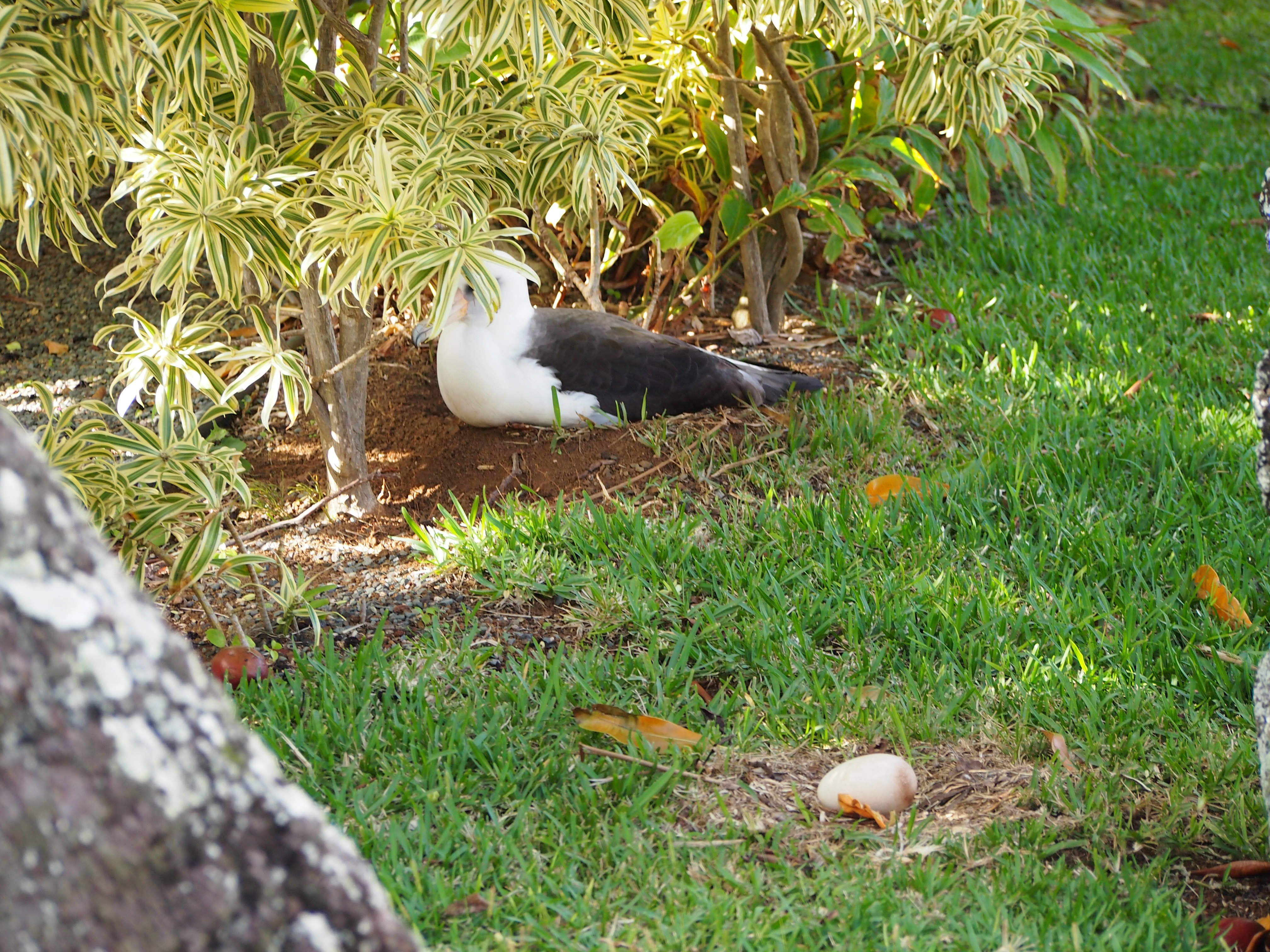
I have been following the ongoing saga of KP467, the bird whose mate of many years, KP531, left her for a bird he met last season.  On December 22nd, KP467 abandoned her egg after incubating it for one month.  On the afternoon of December 25th, she returned to her nest and resumed incubation.  But when I checked her nest yesterday, December 26th, she had abandoned it again.

Abandoned egg of KP467 and KP531

She was standing in the driveway next to the nest, and she eventually walked out on the nearby bluff and took off.

KP467, after abandoning her nest again

After she left I went over to the nest and touched her egg.  It was icy cold.  The egg had spent 3 unprotected nights in rainy and cold weather, so I was not surprised.  She was not being a bad parent by leaving the nest, she had spent a month without food after laying her egg.  On an airplane the flight attendants always tell parents that in an emergency they should fasten their own oxygen masks before helping their children.  An albatross who is weak with hunger will not be able to care for a chick.

Now KP467 will have to put her history with KP531 aside and start to look for another mate.  She may not know this for a while; it takes some birds a long time to get used to it.  Some Princeville albatrosses who have lost a mate stay in the same area where they are used to nesting, some move on to another location.  Wherever she is I will continue to observe her as she makes her way in the albatross world.


Posted in Uncategorized | Leave a comment